
Don't Start Anything New On Your Skin This Week
Seven days out from photos, the smartest thing you can do to your face is boring on purpose. Here's the calm version of the plan.
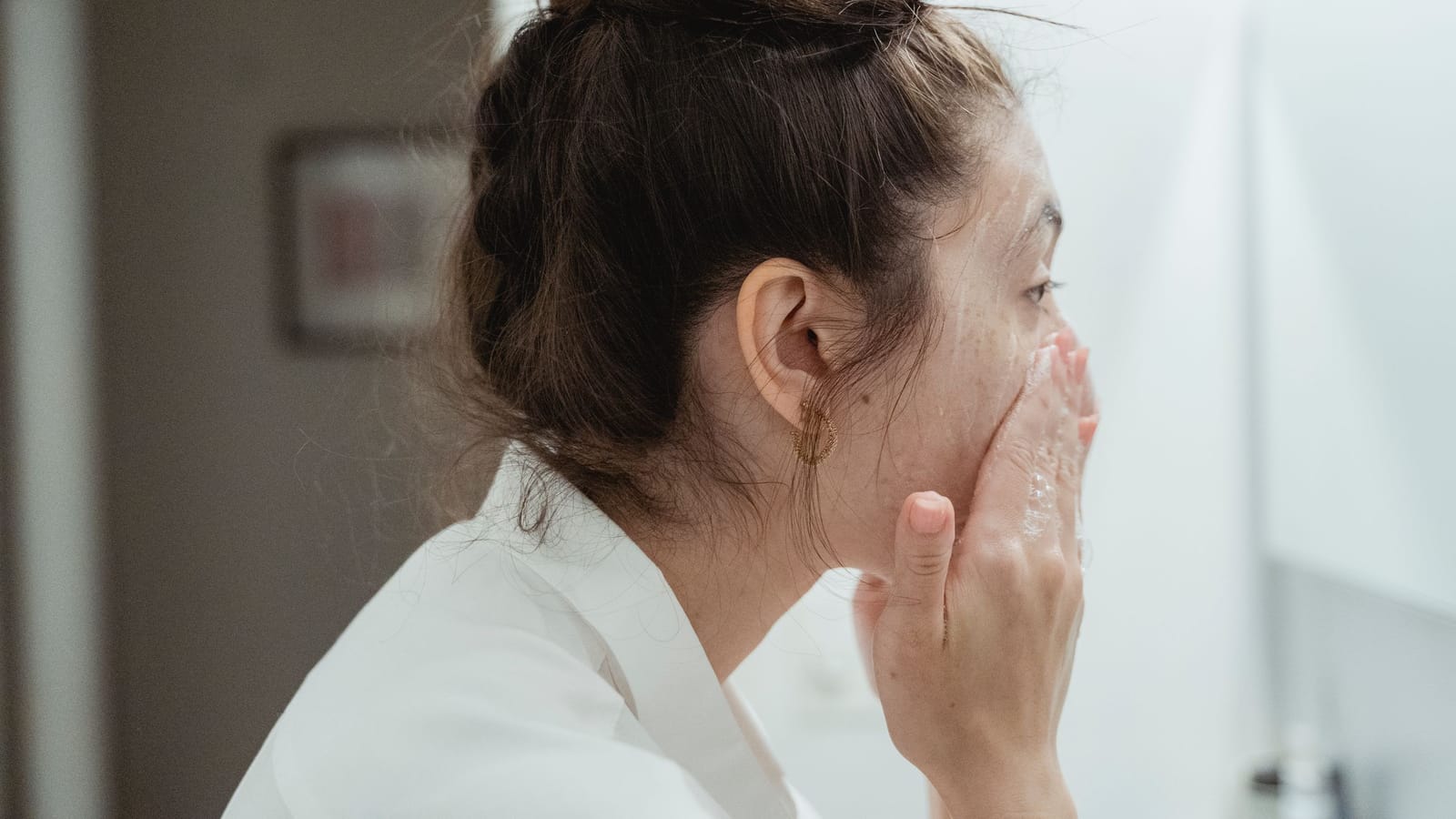
Seven days out from photos is exactly the wrong time to buy a new product.
That's the whole plan in one line, and it's the part almost everyone gets backwards. The week before something you care about is when the drugstore aisle starts looking like a rescue mission. A new toner, a clay mask you saw someone use, an acid you can't pronounce. Your skin doesn't know there's a photo on Friday. All it knows is that something unfamiliar showed up three days in a row, and it responds the way skin usually responds to unfamiliar things — redness, flaking, a breakout in a spot that was fine last Tuesday.
So the plan for this week is boring. Deliberately. You're not fixing anything in seven days. You're protecting what you've already got.
Days 7 through 4: lock the routine you already have
Wash your face twice a day with a gentle cleanser, lukewarm water, thirty seconds or so. Morning and before bed. That's it. If you've been using something for weeks that your skin likes, keep using it exactly as you have been. Don't double up. Don't add a second exfoliant because you want faster results. Don't scrub.
Moisturizer stays, even if your skin runs oily. Skin that's stripped and tight tends to overcompensate, and dry patches show up under makeup more obviously than a spot does.
Sunscreen in the morning, SPF 30 or higher, every day including the gray ones. Sunburn a few days before photos is a genuinely annoying problem to have, and it's the one on this list that's completely avoidable.
If you already wear a sunscreen your skin likes, keep it this week. Any broad-spectrum SPF 30 worn every day beats skipping it, and switching now breaks the whole nothing-new rule. When you buy your next one, go mineral: zinc oxide or titanium dioxide. They sit on top of the skin, they're broad-spectrum, and they're gentler if your skin reacts easily. They're also the only two filters the FDA has proposed as "generally recognized as safe and effective." Some leave a white cast, and tinted ones fix that. Blue Lizard Sensitive Mineral SPF 30, CeraVe Hydrating Mineral Sunscreen SPF 30 and EltaMD UV Physical SPF 41 (tinted) are good places to start. Try it on a normal week, not a photo week.
Change your pillowcase. Then change it again midweek. It takes ninety seconds and costs nothing.
Wipe your phone screen. You press it against the side of your face several times a day, and it's been in your bag, on the cafeteria table, and in somebody's hand who just ate fries.
Hands off your face entirely. You already know this one. Picking at a spot on Tuesday is how you get a scab on Friday, and a scab photographs worse than anything it replaced.
The one thing that actually helps an angry spot
If something comes up big and sore, cold helps. A clean, cold compress held on it for a few minutes brings down swelling, and swelling is most of what makes a spot look dramatic.
A hydrocolloid patch overnight is the other reasonable move. It's a small clear sticker that pulls fluid out and, more usefully, makes it physically impossible for you to touch the spot while you sleep. Put it on clean, dry skin before bed. Take it off in the morning.
What doesn't help: layering four spot treatments on the same square centimeter of skin because one wasn't working fast enough. That's how you turn one spot into a dry, flaking red patch that makeup slides off. Benzoyl peroxide or salicylic acid can be part of a normal routine, but the dose that fixes things in your head isn't the dose that fixes things on your face.
And don't squeeze it. Not the night before, not the morning of, not ever, and especially not when it's deep and sore with no head on it. Squeezing pushes the inflammation sideways under the skin. You trade one spot for a bigger red area and, sometimes, a mark that outlasts the whole thing by months.
A gentler step after you wash
If the alcohol sting of most things you put on a spot is what's been putting you off, GermProof is worth knowing about. Full disclosure: it's a sister brand of BRO.
It comes as a spray and a gel. It's all-natural, alcohol-free, odorless, non-drying and non-toxic, made of chelated silver at 200 ppm, distilled water, and vegan chitosan that comes from mushrooms rather than shellfish. On clean skin it forms an invisible, breathable antimicrobial barrier that lasts for hours per application. It soothes irritated skin and supports faster healing, which is the useful part when you've got something red and tender and you've been told to leave it alone.
Where it fits: after you wash, on clean skin, as one quiet step. Not a cure for acne, and nobody's pretending otherwise. If your skin is easily irritated and the harsh stuff has been making things worse, this is the no-sting option.
Days 3 and 2: sleep is the unglamorous one
Go to bed earlier. Not as a wellness slogan — because tiredness shows up around your eyes and in how you carry yourself, and because late nights are when people get bored and start pressing on their faces in the bathroom mirror.
Drink water through the day. Normal amounts, not a gallon challenge.
Eat normally. This isn't the week to change how you eat, skip meals, or try anything you saw online that involves cutting out an entire food group. Your body needs fuel to heal skin, and no photo is worth showing up lightheaded.
Do a makeup test run on day 2, not on the morning of. Full face, the way you'd actually wear it, and then look at yourself in daylight near a window. If the foundation goes patchy over a dry area or the concealer settles into a spot, you now have a day to fix it instead of eleven panicked minutes.
Wash your brushes and sponges while you're at it. Warm water, a little gentle soap, lay them flat to dry overnight.
The morning of
Wash, moisturize, sunscreen. Same as every other day.
Nothing new. No masks, no last-minute acid, no toothpaste on a spot, whatever your cousin swears by. If you've got a patch on and it's done its job, take it off at least an hour before you put makeup on so the skin underneath settles.
Then leave your face alone and go do the day.
When this advice runs out
Some acne doesn't respond to routines, and that isn't a discipline problem or a hygiene problem. If you're getting deep, painful lumps under the skin, if breakouts are leaving marks or scars, or if you've been doing everything sensible for a couple of months with no change, that's a conversation with a doctor or a dermatologist. Tell a parent you want to go. Real treatment exists, it works, and the sooner you start the less there's to undo.
Asking isn't admitting defeat. It's the same instinct as getting a sore ankle looked at instead of limping through the season.
One more thing about the photos
In ten years you're going to look at that picture and notice who was standing next to you, and what you were all laughing at, and how young everybody looked. You won't notice the spot on your chin. Nobody will. They'll be busy looking for themselves.
Go be in the photo.
Nina Castellan
BRO for Her
Runs the women-facing desk. Same standard, same tools, written for a different reader — not a softer one.

Read next