
Start lifting, and don't let anyone talk you out of it
The five movements worth learning, what your first month should look like, and what to say to the people who tell you not to bother.
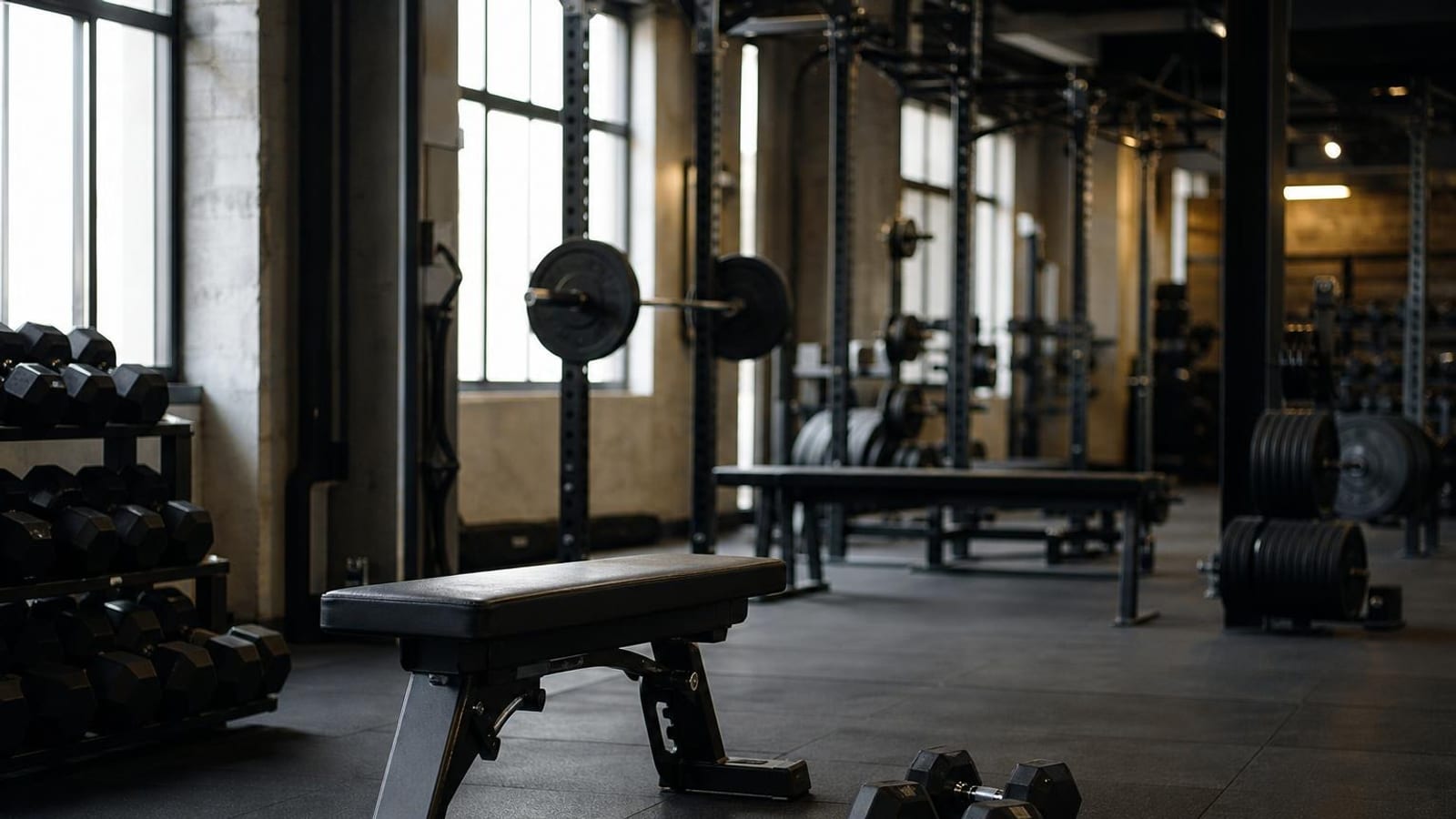
Pick up something heavy this week. A loaded bar, a dumbbell, a kettlebell, a sandbag, your own body on a pull-up bar. Do it badly, do it with someone who knows more than you, and come back two days later. That's the whole start. Everything else in this piece is detail.
The detail matters, though, because most girls who quit lifting don't quit because it's hard. They quit because somebody said something and they didn't have an answer ready.
Five movements cover almost everything
You don't need a machine for every muscle. You need to get strong at five patterns, and then get stronger at them for years.
- Squat. Anything where your hips and knees bend and you stand back up. Goblet squat, back squat, split squat.
- Hinge. Bending at the hips with a flat back. Deadlift, Romanian deadlift, hip thrust.
- Push. Press-ups, bench press, overhead press.
- Pull. Rows, lat pulldowns, and eventually a chin-up.
- Carry. Pick heavy things up and walk with them. Farmer's carries. Underrated, and brilliant for your grip and your back.
Two sessions a week, two or three of these patterns per session, and you're already doing more than most people ever do.
Your first month, specifically
Weeks one and two, go light enough that you could do three more reps than you're doing. This feels pointless. It isn't. You're teaching your body the shape of the movement while nothing's at stake.
Three sets of eight on most things. Five sets of three to five once you're doing heavier barbell work, months down the line.
Write it down. Phone notes, a paper notebook, whatever. Date, exercise, weight, reps. This is the single habit that separates people who get strong from people who go to the gym.
Then make one number go up each session. One more rep. Two and a half more kilos. One less minute of rest. Not all of them. One.
Rest more than feels acceptable between heavy sets. Two to three minutes. Sitting still is part of the work, not a failure of effort.
Progress is slower than you've been led to believe
In the first few months you'll add weight fast, because you're learning, not because you're transforming. Then it slows down, and that's the point where most people decide it isn't working.
It's working. Strength is a ten-year project with good months and flat months. A flat month is information, not a verdict. Usually it means you're sleeping badly, or you skipped sessions, or you haven't eaten properly, or you've been going to failure on everything and never recovering.
Train hard. Don't train wrecked. If you can't finish the session you finished last week, that's a sign to eat, sleep and come back, not to add more.
The people who'll try to talk you out of it
They come in a few reliable types, and none of them are being malicious. That's what makes it confusing.
The friend who says you'll get bulky. Getting strong takes years of deliberate work. Nobody accidentally becomes a powerlifter on two sessions a week. And the honest answer underneath that is: your body isn't a group project. What it looks like isn't up for a vote, and you don't owe anyone an explanation of it.
The relative who thinks it's not for girls. Ask any rower, netballer, hockey player, sprinter or climber. Strength is upstream of everything. It's why you win the ball, why you don't get hurt, why you can carry your own bag up three flights.
The boy at the squat rack who "helps" without being asked. Sometimes he means well. You're still allowed to say, "I'm all right, thanks," and go back to your set.
Yourself, at 6:40 in the morning. This one's the most dangerous. Deal with it by deciding the night before and laying the kit out.
A line about the gym that shouldn't need saying, but does
No coach, no trainer, no older lifter puts hands on you to "fix your form" without asking first and without a good reason. Not your hips, not your back, not anywhere. Nobody's entitled to comment on your body, and nobody's entitled to touch you, ever, for any reason, including a helpful-sounding one.
If it happens, or if anything at a gym or a club makes your stomach drop, tell a parent, your PE teacher, your coach's manager or the school nurse. Today, not eventually. You won't be in trouble, and you're not overreacting. Adults who train properly will back you on this without hesitating.
Eat like someone who trains
You can't get strong on a skipped breakfast and a packet of crisps. Training is a demand you're placing on your body, and your body has to be able to meet it.
So: eat breakfast. Get protein at every meal — eggs, chicken, fish, yoghurt, beans, lentils, milk. Drink water before you train, not just after. Have something to eat within an hour or so of finishing.
If you're being told, by an app, a video or a person, that you should be cutting food to change how you look, stop and talk to your GP or your school nurse. That's a medical conversation with a qualified adult, not a training conversation. Real coaches feed their athletes.
Sleep is the other half. Eight or nine hours isn't indulgence at your age, it's the thing that turns training into strength. A session on six hours of sleep is a session you mostly wasted.
Sore, and the other thing
Muscle soreness is dull, spread out, worst a day or two after, and it fades as you keep training. Normal. It stops being much of a feature after the first few weeks.
Sharp pain, pain in a joint, pain in one specific spot, anything that makes you limp or changes how you move — that's different. Stop, and go and see a doctor or a physiotherapist. Don't train through it and don't diagnose yourself off a video. One conversation with a professional now beats six months of guessing.
Find one person who knows more than you
A PE teacher. A rugby or athletics coach at your school. A parent who used to lift. A qualified coach at a local gym, with your parents in on the arrangement. Someone who'll watch your deadlift and tell you your back's rounding.
Ask them to watch two sets. That's all. Two sets, twice a month, will fix more than a hundred hours of scrolling.
And tell your parents what you're doing. Not because you need permission to be strong, but because they can drive you, feed you, pay a membership, and be genuinely pleased about it. Most parents are far more into this than their daughters expect.
Six months from now
You'll pick up something in the kitchen that used to be awkward and notice it isn't. You'll get to the top of the stairs still talking. In a match, you'll hold your ground against someone bigger and it'll surprise both of you.
Nobody will congratulate you for any of it, because strength is quiet. It just shows up, in small moments, as the absence of struggle.
That's the part they can't talk you out of once you've felt it.
Nina Castellan
BRO for Her
Runs the women-facing desk. Same standard, same tools, written for a different reader — not a softer one.

Read next