
What's normal for your period and when to tell someone
The ranges that count as normal, the signs that mean call a doctor this week, and how to start the conversation without dying of embarrassment.
Put a spare pair of underwear in a sandwich bag, shove it in the bottom of your backpack, and forget it's there. Add two pads or tampons and a few ibuprofen if your parents are fine with that. Total cost, maybe four dollars. That one bag solves about eighty percent of the situations that make girls panic in a school bathroom, and you only have to set it up once.
Now the part nobody explains well.
Your first couple of years are supposed to be messy
Most girls start somewhere between 10 and 15. After that first period, your cycle usually takes a year or two to settle into any kind of rhythm. You might go six weeks, then three, then skip two months entirely. That's not you being broken. Your body is running a brand new system and it takes a while to calibrate.
Once things settle, a typical cycle runs somewhere in the range of 21 to 35 days, counted from the first day of bleeding to the first day of the next one. Bleeding itself usually lasts two to seven days. Color changes across those days too. Bright red at the start, browner and darker at the end, sometimes with small clots on the heaviest day. All of that's ordinary.
What's not ordinary is going three months with nothing after your cycle has been regular for a while, or still having no period at all by age 15. Both of those are worth a doctor's appointment. Not an emergency. Just an appointment.
Start tracking, even badly
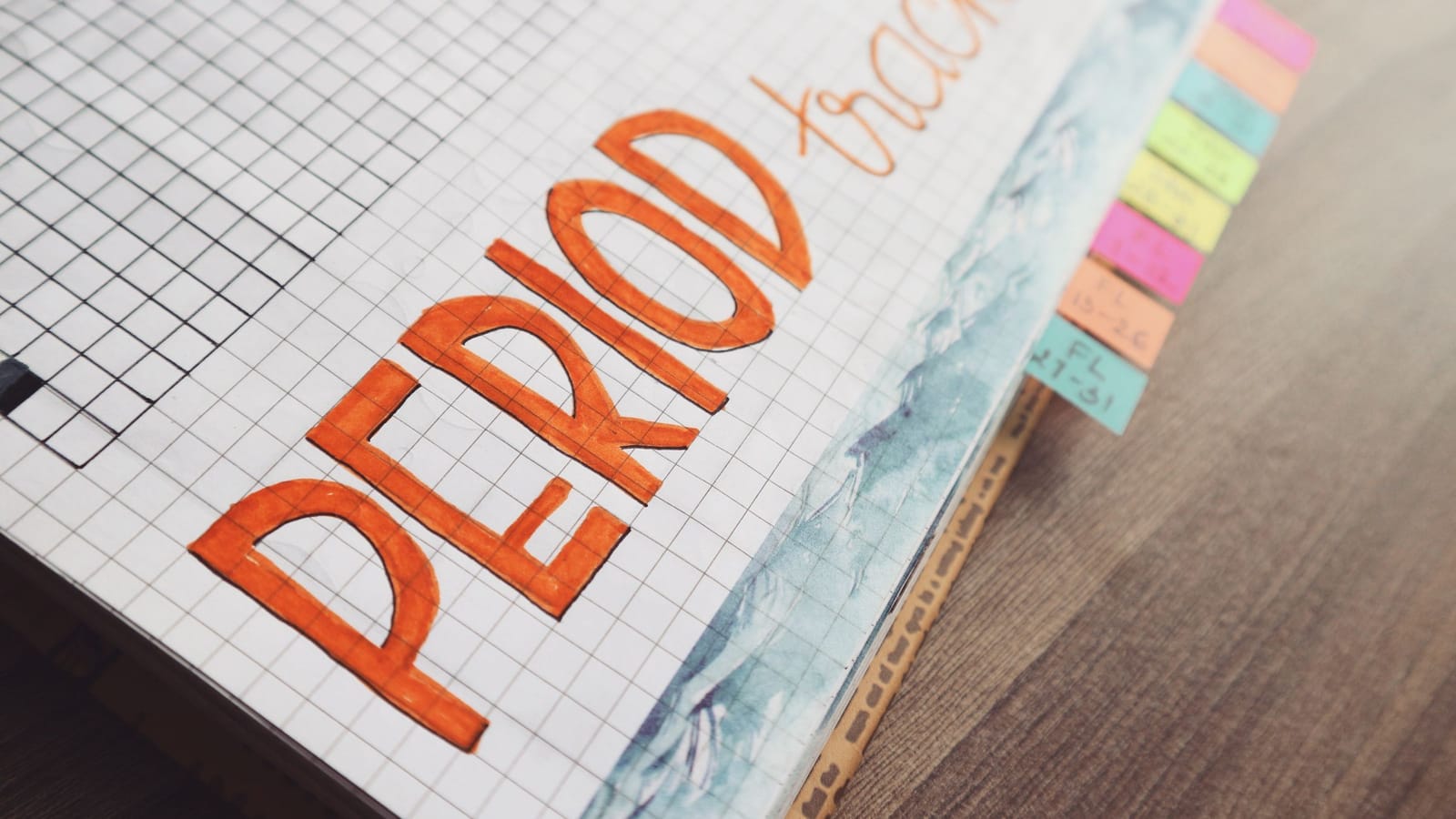
Write the start date on a paper calendar or in your phone's notes app. That's it. One date a month.
Do it for six months and you'll know whether you're a 28-day person or a 33-day person, which means you'll stop being ambushed. It also means that when a doctor asks "how long are your cycles?" you have an actual answer instead of a guess. Adults take you more seriously when you have data, and that's true at 14 and it's true at 40.
If you want to add anything else, add pain level from 1 to 10 and how many pads or tampons you went through on your heaviest day. Those two numbers are exactly what a doctor needs.
Cramps are normal. Being unable to stand up isn't.
Real cramps feel like a deep ache low in your abdomen, sometimes spreading into your lower back or the tops of your thighs. They tend to be worst in the first day or two. A heating pad, a walk, and an over-the-counter pain reliever taken early usually take the edge off. Ask your mom or dad which one they want you using and how much, because that depends on you.
The line to watch is function. Can you go to school, sit through class, get through practice at a lower gear? Rough but manageable is normal.
Pain that puts you on the floor isn't. Pain that makes you throw up, pain that no medicine touches, pain that keeps you home from school every single month — that's not a toughness test you're failing. It's a medical thing with real names and real treatments, and girls lose years to it because somebody told them everyone deals with this. Everyone doesn't deal with that.
"Heavy" is a measurement, not a vibe
This is the one that confuses people, because you have no idea what anyone else's period looks like.
So use the count. Soaking through a full-size pad or a regular tampon in an hour or less, for several hours in a row, is heavy. Bleeding hard enough that you're getting up at night to change is heavy. Clots bigger than a quarter, regularly, is heavy. Bleeding for more than seven days, every time, is long.
Any of those, tell a parent and get seen. Losing that much blood month after month can leave you genuinely worn out, dizzy on the stairs, cold all the time, or weirdly short of breath on a jog you used to handle. A basic blood test can check for that, and if something's low, it's usually fixable.
Bleeding between periods, or bleeding that shows up out of nowhere weeks after your last one, also gets a phone call. Probably nothing. Still gets a call.
Tampons, pads, cups, and the one rule that matters
Pads are the easiest place to start and there's no prize for skipping them. Period underwear works well for lighter days and overnight. Tampons and cups have a learning curve, and the instructions in the box are actually decent, so read the whole insert before you try.
The rule that matters with tampons: don't leave one in longer than eight hours, and use the lowest absorbency that does the job. Set a phone alarm if you sleep hard. There's a rare but serious infection called toxic shock syndrome connected to leaving them in too long, and the warning signs are a sudden high fever, vomiting, a sunburn-looking rash, dizziness or feeling confused. If that happens, take the tampon out and get an adult immediately, same hour. Say the word "tampon" out loud to whoever's driving you to urgent care. They need to know.
That's the scary paragraph. It's rare. Now move on.
Telling your mom or dad
The conversation you're dreading takes about eleven seconds.
"Hey, I need pads" works. So does "my cramps are bad enough that I want to see a doctor." You don't need a speech and you don't need to pick a perfect moment. Car rides are good because nobody has to make eye contact.
If your mom isn't the one you're close to, tell your dad. He'll handle it better than you think. Dads have been buying pads at ten at night for a very long time and the ones who love you're not embarrassed by your body working correctly. If neither parent is an option right now, the school nurse is a real resource and she's heard all of it this week already.
Call the doctor if any of these show up
- No period at all by 15, or nothing for three months after you'd been regular
- Soaking a pad or tampon in an hour, for several hours running
- Bleeding longer than seven days, most months
- Pain that stops you from going to school or that medicine doesn't touch
- Bleeding between periods
- Fever, vomiting, rash or dizziness while using a tampon — that one's today, not next week
One more. If your period disappears while you're training hard, that's your body flagging something, and it's a doctor question rather than something to push through quietly.
Everything in here's the general version. Your doctor or nurse practitioner gets to give you the specific version, and you're allowed to ask them anything without your parent in the room if that's easier — just ask.
You're going to have this cycle for roughly the next forty years. Learning what your normal looks like now means that when something changes at 19 or 27, you'll notice on day one instead of month six. That's not a small skill. That's knowing how to run your own body, which is the same category as knowing how to drive a car or read a paycheck, and nobody ever regretted learning it early.
Nina Castellan
BRO for Her
Runs the women-facing desk. Same standard, same tools, written for a different reader — not a softer one.

Read next