
How not to get hurt in your first year of lifting
Six habits that keep teenage lifters out of the physio's waiting room, including the one that takes four seconds a set.
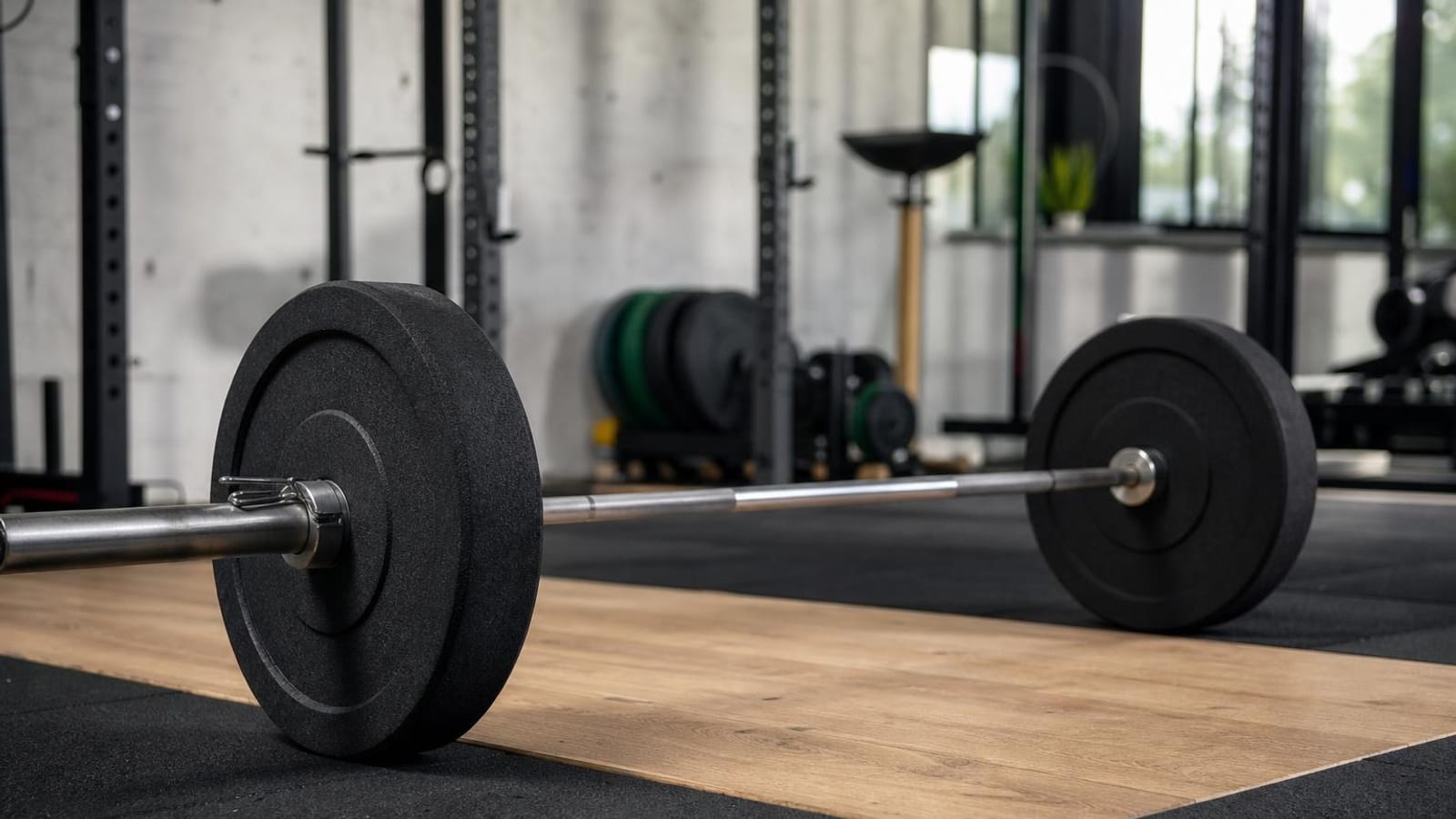
Clip the collars on the bar before every single set. It takes four seconds, and it's the cheapest injury you'll ever avoid, because a plate sliding off one end of a loaded bar doesn't give you time to react. Most school gyms have collars sitting in a bucket under the rack. Use them.
That's the level this piece works at. Not philosophy. Habits.
Guys who get hurt in their first year of training usually aren't unlucky. They did one of a handful of specific things, and every one of them is avoidable without slowing your progress down at all.
Get taught once, properly, by someone who can watch you
You can't see your own back round. You can't feel your knee caving in, because it doesn't hurt while it's happening.
So get eyes on you. Your PE teacher, a school sports coach, the staff member who does the induction at your local gym. Ask for ten minutes on the squat and the hinge specifically. Most of them will be pleased you asked, because most people don't.
If nobody's available, set your phone on a gym bag on the floor, side on, and film one working set. Watch it before you add weight next time. You're looking for one thing at first: does your lower back stay flat, or does it curl under near the bottom? If it curls, the weight is too heavy or the range is too deep. Both are fixed by going lighter for a fortnight.
Being coached isn't a sign you're weak at this. It's the difference between a lifter and someone who just moves weights around.
Five minutes of warm-up, not fifteen and not zero
Walk or bike for three minutes until you're breathing slightly harder. Then do the movement you're about to train, with an empty bar, for ten reps. Then one set at roughly half your working weight. Then one at something close to it.
That's it. You don't need twenty minutes of stretching, and long static stretches right before heavy lifting can leave you feeling loose in a way that isn't useful.
A real warning about school gym bars: they're not all 20 kg. Plenty of them are 15 kg, and some are unmarked mystery bars that weigh whatever they weigh. If your numbers suddenly jump when you move to a different gym, it's probably the bar, not you. Weigh it if there's a scale, or just track your own progress and stop comparing.
Add weight slower than feels reasonable
The standard advice is small jumps. On squats and deadlifts, 2.5 kg at a time. On press and bench, 1.25 kg if the gym has the small plates, and if it doesn't, add a rep instead.
This will feel insultingly slow in week three, when everything is easy and you're recovering fine. Do it anyway. The bill for jumping 10 kg a week arrives in about month four, and it arrives as a strained lower back or an elbow that aches every time you bench.
And leave reps in the tank. Finish your last set knowing you had two more in you. Grinding to absolute failure on a barbell lift is where form breaks down, and form breaking down under maximum load is the exact recipe for the injuries that take six weeks off.
Don't test a one-rep max in your first year. There's no reason to. If you're curious how strong you are, work up to a heavy set of three that still looks clean on video. You'll learn the same thing without the risk.
Learn which pain matters, and tell someone about the kind that does
Muscle soreness spread across the belly of a muscle, arriving the next day, fading by day three, is ordinary. Annoying, but ordinary.
Pain you need to take seriously:
- Sharp, as opposed to dull and achey.
- Pinpoint, where you can put one finger on the exact spot.
- On a joint line — knee, elbow, shoulder, lower back.
- Numbness, tingling or pins and needles anywhere, especially down an arm or a leg.
- Anything that's still there after four or five days of rest.
Stop the session. Not the set. The session.
Then tell an adult today: a parent, the school nurse, your coach. If it's numbness or it's not improving, that's a GP appointment, not something you manage yourself with ice and hope. You won't be in trouble for saying you hurt your back lifting. You will be in trouble with your own body if you hide it for three months and train through it.
Nobody should be diagnosing anything from an article, including this one. What this article can tell you is when to go and ask.
Never get pinned
Two rules that cover almost all of it.
If you're benching alone, use dumbbells, or use a rack with the safety pins set just below your chest height so a failed rep lands on steel instead of your ribs. If you're benching a straight bar alone with no rack and no spotter, leave the collars off that one lift so you can tip the bar and let the plates slide. It's the one exception to the rule at the top of this piece, and it's ugly, and it's better than the alternative.
If you're squatting, set the safeties. Every gym rack has them. People skip it because it takes twenty seconds.
Ask for a spotter when you need one. Walk over, say "could you spot me for two sets?" Almost nobody says no. The guys in there who actually know what they're doing will think better of you for asking, not worse.
Skip the supplement aisle entirely
You don't need pre-workout. You don't need a fat burner, and no teenager should ever touch one. You don't need anything that somebody in the changing room offers you out of a tub with no label, and if someone offers you something to speed this up, that's a conversation to have with your parents that evening.
If you're curious about creatine or protein powder, the person to ask is your GP or a pharmacist, before you buy anything, not after.
Real food does most of it. You're growing and training at the same time, which means your body needs actual meals, not less of them. This isn't the stage of life for skipping breakfast or training on an empty stomach through a double PE lesson. If you've got questions about what to eat around training, a GP or a registered dietitian is the right person, and asking is a sign you're taking it seriously.
Sleep does the rest. Muscle isn't built in the gym, it's built while you're unconscious.
Two days a week where you don't lift
Your tendons and joints adapt slower than your muscles do. That gap is where overuse injuries live, and it's why the guy who trains hard six days a week in February is often the guy in a sling by May.
Take two full days off lifting. Play football, go for a walk, do nothing. Growing bodies are working on two projects at once, and recovery isn't a day wasted.
The part nobody watches
Half of training safely is just refusing to be talked into something. The bar loaded up because three mates are filming. The extra rep when your back already shifted on the last one. The session you do anyway on four hours' sleep with a shoulder that's been complaining for a week.
There's nobody marking you on this. You're the only one who knows whether you actually left two reps in the tank or told yourself you did.
Your body was given to you, and looking after it's part of the job. Nobody's going to remember what you deadlifted at sixteen. You'll notice the back that still works at forty.
Ade Fisher
Young Men
Teaches the trades intake at a community college. Writes the manual he wishes his students arrived with.

Read next