
The questions to ask before you pick college or a trade
Forget the salary screenshots. Start asking what a Tuesday actually looks like, who's holding the loan, and which doors stay open.
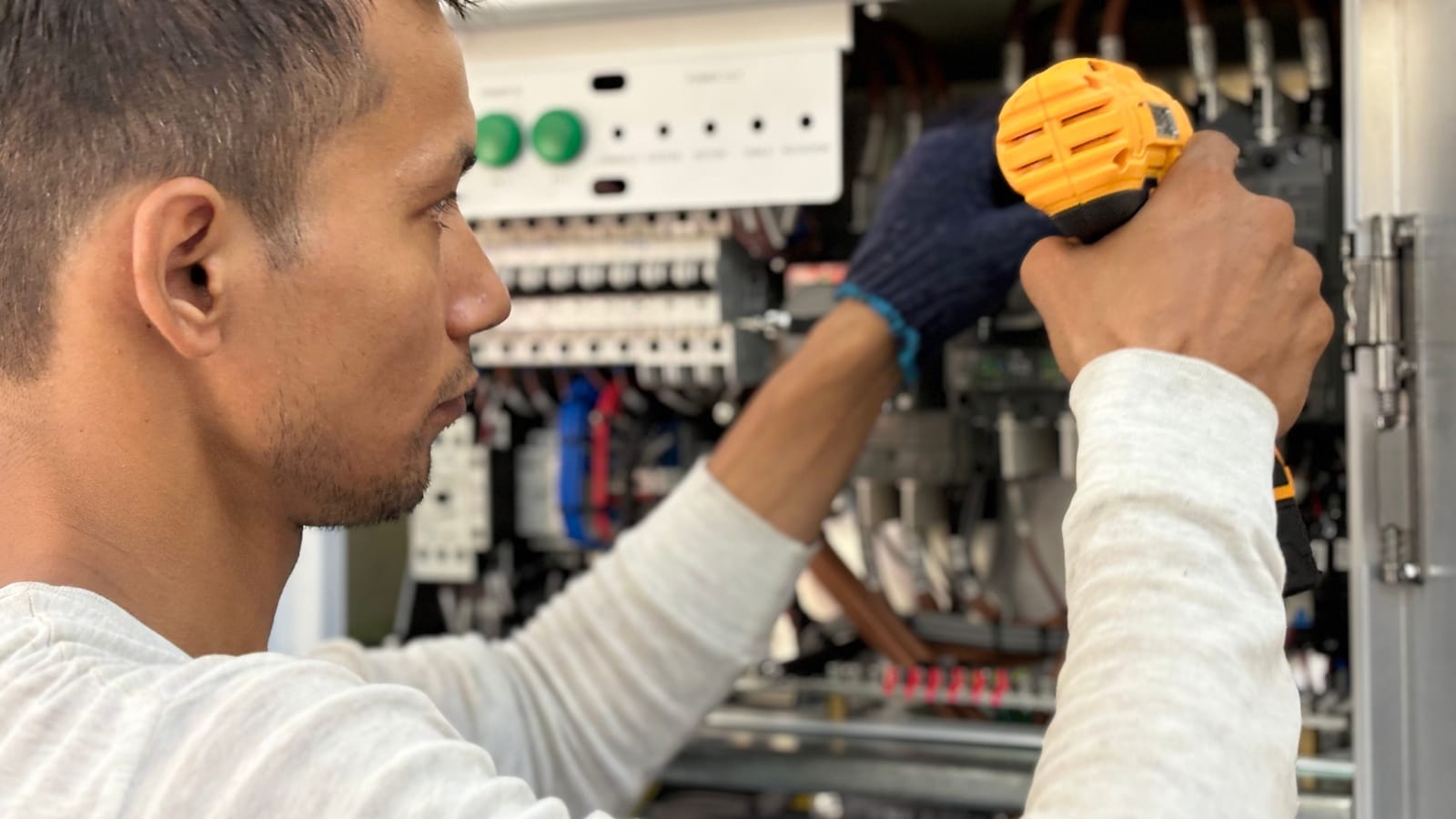
Start with the question nobody asks you at the dinner table: what does a Tuesday look like?
Not the job title. Not the salary somebody screenshotted. Tuesday. What time do you get up, what's in your hands at 10 a.m., who are you talking to, do you eat lunch sitting down, how wrecked are you at 6? A guy who can describe that about the work he's aiming at is a mile ahead of the guy who says "business, probably" or "I'll do trades or something."
You don't have to decide right now. You do have to start collecting real information right now, because the good information takes a year to gather and senior spring shows up fast.
Ask what the training actually costs, and then do the arithmetic yourself
Colleges publish a sticker price and almost nobody pays it. Every school's website has a net price calculator. Sit down with a parent, put your family's real numbers in, and see what comes out the other end. That figure is the one that matters, and it's usually nothing like the number on the brochure.
Do the same on the other side. Call your local apprenticeship office or the training center for the trade you're curious about and ask two things: what does a first-year apprentice earn per hour, and what does the required tool list cost? Both numbers exist. Somebody will tell you over the phone in about four minutes.
Then multiply. Whatever the yearly cost of school turns out to be, multiply it by four or five, because plenty of degrees take five. Whatever the apprentice wage is, multiply it by roughly 2,000 hours and remember you'll be paying for tools, gas and a work truck out of it.
Nobody's going to run that math for you. Run it on paper. It changes how the whole conversation feels.
Ask who's holding the debt, and what the monthly payment is
Loans don't stay abstract. If you borrow, it's your name, and it follows you into your twenties.
When you talk to a financial aid office, don't ask for the total. Ask them this: what would my estimated monthly payment be, and for how many years? A total sounds like a scary word. Two hundred and something a month for ten years sounds like a decision you can actually evaluate, because you can compare it to rent.
If the number gets complicated, that's what the financial aid officer is there for, and it's a fair thing to bring to your parents rather than solve alone. Big money questions belong to the whole family.
Five questions to ask someone who's already doing the job
Find a person. An uncle, a guy at church, your friend's dad, the HVAC tech who came to the house. Most adults will talk about their work for twenty minutes if you ask like you mean it.
- What part of this job would surprise me?
- What did your first two years really look like?
- Who washes out, and why?
- If you had a son my age who wanted to do this, what would you tell him to do this year?
- What's the ceiling if I never move cities and never start my own company?
That last one separates the honest answers from the sales pitch. Every field has a version of "you can make great money," and every field has a quiet asterisk about where and how.
Ask which doors stay open
Some choices are easier to reverse than others, and it's worth knowing which is which before you jump.
A licensed electrician who decides at twenty-six that he wants a degree can go get one, and he'll walk in with savings and a trade he can work nights. That's a real door and guys walk through it every year. A guy with three semesters of a degree he didn't want and loans attached can still go get an apprenticeship, but he paid for the detour first.
The other direction matters too. Nursing, engineering licensure, teaching, medicine, law — those require the degree by law, not by tradition. If one of those is pulling at you, the question was never college or trade. It's which school and how you pay for it.
Ask what it does to your body over thirty years
This is the part the recruiting videos skip. Skilled trades are physical, and the good guys in them plan for that. They wear the knee pads nobody wears. They learn to estimate, to run a crew, to own the company, so that at fifty they're not still up a ladder eight hours a day.
Ask a man in his fifties who's done it: what hurts, and what would you have protected?
Desk work has its own bill. Sitting eleven hours and driving home isn't free either. Neither answer is "easy." Just go in knowing which kind of tired you're signing up for.
Test it cheaply before you commit anything
Shadowing one day teaches you more than four months of scrolling. Ask your school counselor this week — not in March of senior year — what dual enrollment classes, co-ops, or career center programs your school already runs. A lot of schools have them and barely anyone signs up.
A summer job near the work counts too. Not the job itself, just near it. Loading trucks for a plumbing supply house tells you plenty about plumbers. Sweeping a machine shop tells you whether the noise and the oil bother you or wake you up.
And go to an open house. Union halls, technical colleges and four-year schools all run them, and they're free.
Bring your parents in early, not at the end
The instinct is to figure it all out alone and then announce it. Don't. Parents are far more useful as advisors than as an audience, and a decision they helped build is one they'll help fund, drive you to, and defend when your grandmother has opinions.
Bring them the numbers you found. Ask your dad what he'd do. Ask your youth pastor or an uncle what they've watched go well and badly for guys a few years older than you. Pray about it, if that's how your family does things. None of that's weakness. It's how grown men make big calls.
The question underneath all the others
Skip "what's my passion." That question strands guys for years, because passion usually shows up after competence, not before it.
Ask instead: what do I want to be responsible for? A building that doesn't burn. A patient who goes home. A crew that gets paid on Friday. A family that eats. Every honest job is somebody carrying weight that other people are counting on, and the weight you'd be proud to carry tells you more about your future than any aptitude quiz.
Then go make the phone call. Monday, not someday. The guy who calls the apprenticeship office and the guy who tours the campus both learn something real this month. The guy with the perfect plan and no phone calls learns nothing at all.
Ade Fisher
Young Men
Teaches the trades intake at a community college. Writes the manual he wishes his students arrived with.

Read next