
The training that actually shows up in your game
Most off-season work doesn't transfer to the field. Build a week around what your sport actually asks your body to do.
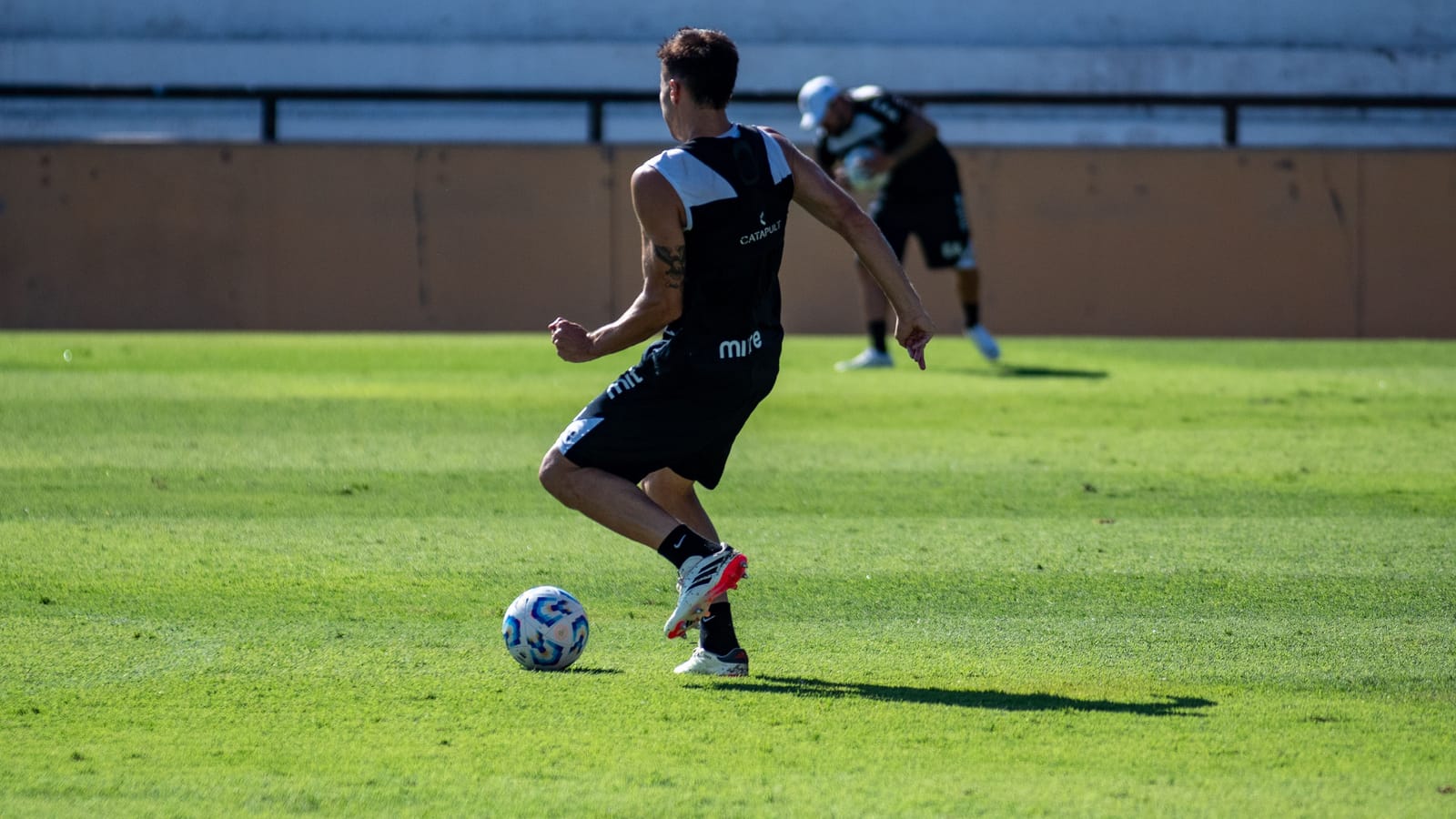
Think about a forward who spent all summer jogging. Thirty-five minutes on the treadmill, four days a week, felt virtuous every time. Then the season started and she was getting beaten to the ball in the third quarter by a girl who'd never jogged a mile in her life.
Basketball isn't a jog. It's somewhere around a hundred short sprints with hard stops, jumps and shuffles wedged between them, over four quarters. Steady-state running trains almost none of that. The jogging wasn't wasted exactly. It just wasn't the thing.
So start with a question that takes about ninety seconds to answer honestly: what does my sport actually ask my body to do?
Write down the demands before you write down the workouts
Get a piece of paper. Not your phone. For your sport, list:
- How long a single effort lasts. A volleyball rally is maybe 5 to 8 seconds. A 400m is under a minute of everything you have. A soccer center midfielder runs for 90 minutes but almost never in a straight line.
- How much rest you get between efforts, and whether you control it.
- Which direction you move. Forward only? Sideways? Backward? Jumping and landing?
- What has to be strong. Shoulders for a swimmer or a pitcher. Hips and ankles for anyone who cuts.
- What gets tired first when you play badly. Be honest here. Is it your legs, your lungs, your hands, or your focus?
That last one is the most useful line on the page. If you mishandle the ball in minute 70 because your brain is fried, more squats won't fix it. Sleep might. Playing more full-speed practice reps definitely will.
Strength work is the base, but keep it small
You don't need a twelve-exercise program. Two sessions a week, 40 minutes each, will change what you can do on the field if you actually do them for four months.
Pick one movement from each of these and rotate every few weeks:
- Squat pattern. Goblet squat, split squat, step-up.
- Hinge pattern. Romanian deadlift, hip thrust, single-leg RDL.
- Push. Push-up, dumbbell bench, overhead press.
- Pull. Row, chin-up or band-assisted chin-up.
- Something on one leg. Almost every sport is played on one leg at a time. Train it that way.
Three sets of 5 to 8 reps, heavy enough that the last rep is genuinely hard and light enough that your form doesn't fall apart. Write down what you lifted. Next week, add a little. That's the whole method, and it works embarrassingly well.
If you've never lifted before, get a coach, a P.E. teacher or an athletic trainer to watch your first few sessions. Not a video. A person who can see your back round and say so.
Learn to land
The single most valuable ten minutes in a young athlete's week is probably landing and cutting practice, and almost nobody does it.
Knee injuries in cutting sports tend to happen on a landing or a plant, not on contact. Coaches who work with girls' teams spend real time on this, and the drills are unglamorous: jump off a box, land soft, knees tracking over your toes, hold it for two seconds. Hop sideways, stick it. Sprint five steps, plant, cut, go.
Do it at the start of practice when you're fresh. Ten reps of each, good ones, not thirty sloppy ones. If your school has an athletic trainer, ask them to show you a proper warm-up sequence for your sport. They'll usually be delighted that somebody asked.
This isn't medical advice and I'm not a doctor. If something already hurts, that's a conversation with your parents and a physician, not something to train through.
Conditioning should look like the game
Match the work-to-rest ratio.
For a sport with short, repeated bursts, run intervals that look like bursts: 15 seconds hard, 45 seconds easy, twelve times. Or shuttle runs, since that includes the deceleration your sport demands. For a rowing or cross-country athlete, the long steady work genuinely is the sport, and jogging isn't a waste at all.
That's the trade-off nobody mentions. General aerobic fitness helps you recover between efforts, so some of it is useful for almost everyone. But if you only have four hours a week outside practice, spend three of them on things your sport actually does.
Touches beat sessions
Skill is a numbers game, and the number is reps, not hours.
A hundred free throws takes about twenty minutes if you're not chatting. Two hundred wall passes with your weaker foot takes fifteen. Fifty serves to a specific corner of the court takes twenty-five.
Pick one skill you're bad at. Not one you're already decent at, because that's more fun and it's why you keep practicing it. Give it fifteen minutes a day, five days a week, and track it. Free throws made out of fifty. Serves in out of thirty. When the number goes up, you've got proof that something's working, which matters on the days when you don't feel like you're improving at all.
In-season, you cut the volume, not the training
Here's where most people quit. Season starts, practices are five days a week, and the lifting stops entirely. By November the strength you built in July is leaking away.
Don't stop. Shrink it. One session a week, 25 minutes, two or three lifts, moderate weight. Enough to hold what you built. If you've got a game Friday, lift Monday or Tuesday, not Thursday.
And a real concession: some weeks you should train less than the plan says. A week with three games, two tests and a bad cold isn't the week to add weight to the bar. Being able to tell the difference between "I don't feel like it" and "my body is actually cooked" is a skill, and you'll get better at it.
Eat enough and sleep enough or none of it counts
Training is a stress. Your body adapts during the recovery, not during the session. Under-fuel or under-sleep and you're just doing damage with no payoff.
That means proper meals, including breakfast, on training days. Food is fuel for what you're asking your body to do, and cutting back while training hard is how athletes end up hurt, exhausted and slower. If you're constantly worn out, if you're not recovering between sessions, or if your period changes or stops, talk to your parents and see a doctor. That's a real signal, not something to push through, and no coach worth playing for would want you to ignore it.
Tell someone when it hurts
Soreness is diffuse, both sides, and fades in a couple of days. Pain is sharp, one spot, and gets worse when you load it.
If it's the second one, say so. Today. Tell your coach, your athletic trainer and your parents. You won't be in trouble, and you won't lose your spot for being honest. Playing through a small injury is how it becomes a big one, and the girl who hides a sore knee for three weeks misses far more of the season than the one who reported it on day one.
The part that compounds
Nobody sees the Tuesday in February when you did your twenty-five minutes of lifting in an empty weight room with the heat off.
But in the fourth quarter, when three people are bent over holding their shorts and you're still moving, everybody sees that.
Nina Castellan
BRO for Her
Runs the women-facing desk. Same standard, same tools, written for a different reader — not a softer one.

Read next