
The planner you'll actually use costs about a dollar
Most guys quit the planner by October because they bought the wrong kind and used it the wrong way. Fix both in one afternoon.
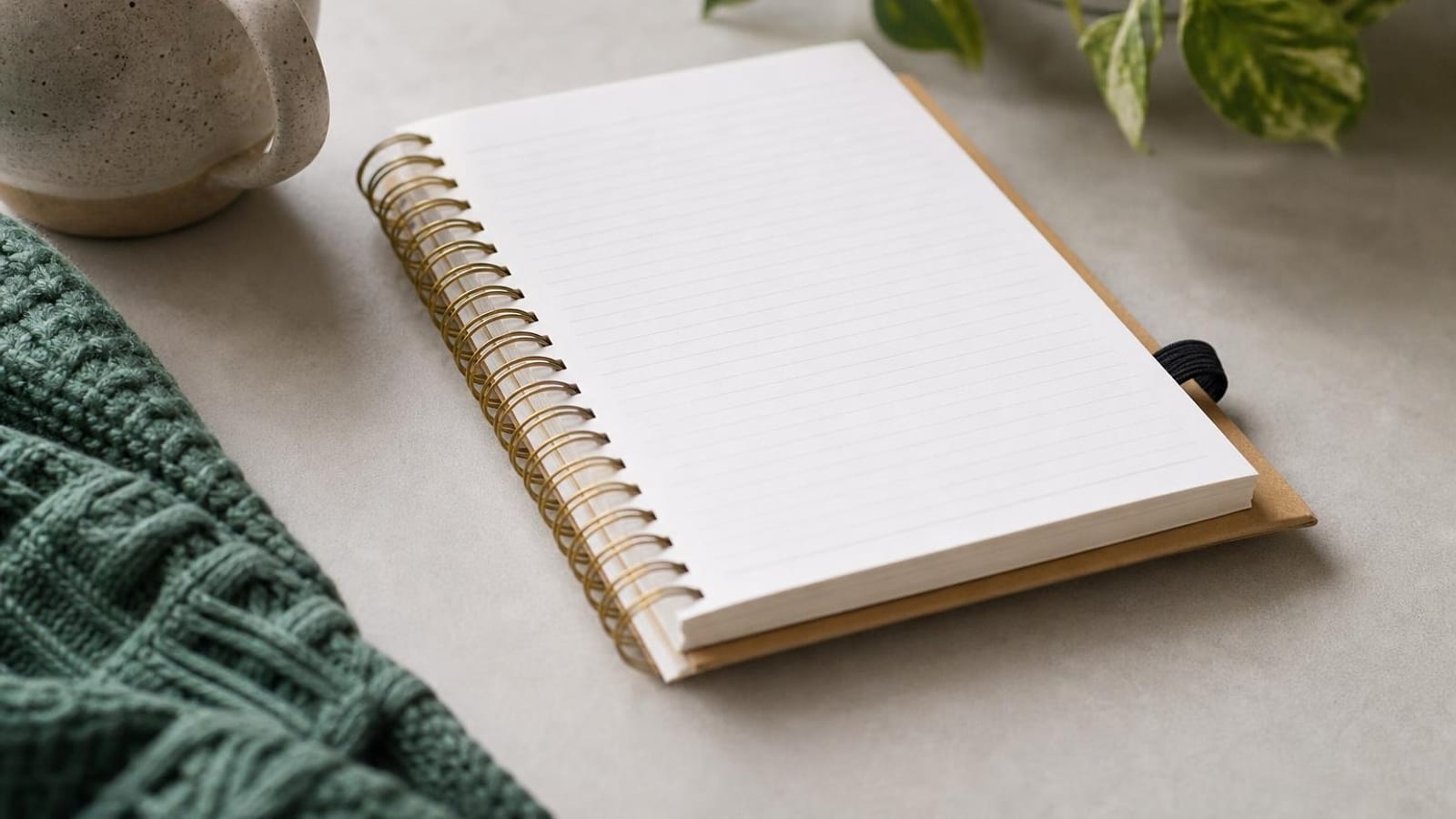
Buy the cheap notebook.
Not the leather one with the elastic band and the ribbon bookmark. Not the app with seventeen color-coded tags. A plain spiral or composition notebook, the kind stacked by the register at the drugstore, one you won't feel bad about scribbling in. The expensive planner is the enemy of the used planner. Guys treat the nice one like a museum piece, write neatly for eight days, mess up a line, and never open it again.
Cheap notebook. Pen you already own. That's the equipment list.
The single rule that makes the whole thing work
Everything goes in one place.
That's it. One notebook holds homework, practice times, the youth group thing on Thursday, your sister's birthday, the book you need to return, the shift you picked up. The reason your last system failed isn't laziness. It's that you had three systems. Assignments on the whiteboard photo, practice in your head, the dentist appointment on your mom's calendar, and the group project in a chat you scrolled past.
Three systems means zero systems, because you can never trust any of them. Trust is the whole point. A planner you half-trust is worse than nothing, because you still carry the low-grade panic of maybe forgetting something, which is the exact feeling you were trying to get rid of.
So when something lands on you, it goes in the notebook. Not later. Then.
Write the date it's due, not the day you heard about it
This is where most guys go wrong, and it's small enough to miss.
If the teacher says on Monday that the essay is due Friday, don't write "essay" under Monday. Write it under Friday. Then write "start essay" under Wednesday. Your planner isn't a diary of announcements. It's a map of the future.
Open to a fresh page and give every school day a block. Doesn't need lines or boxes. Just the date at the top and a space under it. When something has a deadline, flip forward and write it on the day it's actually due, plus one earlier entry for when you'll do it.
One more thing. Write the next physical action, not the topic. "Chemistry" tells you nothing at 7 p.m. and you'll stare at it and pick up your phone. "Chem p.214, questions 1-12" tells you exactly what to do, so you do it. The clearer the line, the less willpower it costs.
The thirty seconds that decide everything
The habit isn't writing things down. It's looking.
Pick one trigger you can't miss and check the notebook there, every single time. The two that work best:
- Before you leave each classroom. Pen out, thirty seconds, write the assignment and its due date while you're still in the room and can ask the teacher what he meant.
- The moment you get home, before anything else. Backpack on the floor, notebook open on the kitchen counter, read tomorrow's page out loud if that helps.
Do both if you can. The classroom one is better because you catch the assignment at the source. Waiting until 9 p.m. to reconstruct your day from memory is how the lab report goes missing until Wednesday at 10:40, when you're in bed and remember, and now it's a choice between a bad grade and a worse night's sleep.
You've had that night. It's not a time management problem. It's a thirty-second problem.
Sunday night, fifteen minutes
Once a week, sit down with the notebook and the whole week ahead of you.
Flip forward seven days. What's coming? A test, a game, a deadline, a family thing. Write it all in. Then look for the collision, because there's always one. The game is Thursday night and the test is Friday morning, so Thursday night isn't a study night. Which means Wednesday is. Write that down now, while you can still do something about it.
Fifteen minutes, and Sunday panic turns into a plan. That's the best return on time you'll get all week.
While you're there, tell somebody at home what's coming. Not because you need permission, but because a parent who knows you have a project due the 14th is a parent who won't schedule a three-hour drive to Grandma's on the 13th. Information flows both ways in a functioning house.
Big projects get worked backwards
Anything that takes more than one sitting needs to be broken up, and you break it from the end.
Say the history project is due the 20th. Don't write "history project" on the 20th and hope. Sit with it for five minutes and go backwards:
- 19th: read it through, fix the ugly parts, print it
- 17th: finish writing
- 15th: write the middle section
- 13th: outline and pull three sources
- 11th: pick the topic, email the teacher to check it's okay
Now the project isn't a boulder. It's five small things, none of which ruins a night. And you learn something the third or fourth time you do this. You always need more time at the end than you think, and you never need as much at the beginning as you feared.
You're going to drop it for four days
You will. Something happens, you skip Wednesday, then Thursday, and by Monday the notebook is a monument to a guy who used to be organized.
So decide right now what you do about it. You don't start a new notebook. You don't apologize to it. You open to today's date, write today's stuff, and keep going. Skipped pages stay blank. Blank pages are fine. A notebook with gaps that you used for nine months beats four fresh notebooks you abandoned in September, November, January, and March.
The guys who stay organized aren't the ones who never miss. They're the ones who restart fast and without drama.
Paper or phone, and why I'd pick paper at fifteen
Honest trade-off. The phone calendar is genuinely better at one thing: reminders. It'll buzz you two days before the deadline, and paper never will. If you already live in your phone calendar and it works, keep it, and add the reminder two days out instead of the day before.
But paper wins on the part that matters more. Writing something by hand makes you think about it for a second, and that second is where you notice the collision on Thursday. Paper also doesn't have a feed. Open your phone to write down an assignment and you're gone for twenty minutes.
Best setup I've seen a guy run: paper notebook for everything, phone alarms for the four or five deadlines that would genuinely hurt to miss.
What this actually buys you
Not straight A's. Something better.
You become the guy whose word is good. The one who shows up with the permission slip signed, who has the group project section done when he said it'd be done, who doesn't need three reminders. Teachers notice. Coaches notice. The manager who hires you next summer notices in about a week.
Nobody hands that out. You build it a dollar notebook at a time, thirty seconds before you walk out of fourth period.
Go buy the notebook today. Write tomorrow's date at the top of page one.
Ade Fisher
Young Men
Teaches the trades intake at a community college. Writes the manual he wishes his students arrived with.

Read next