
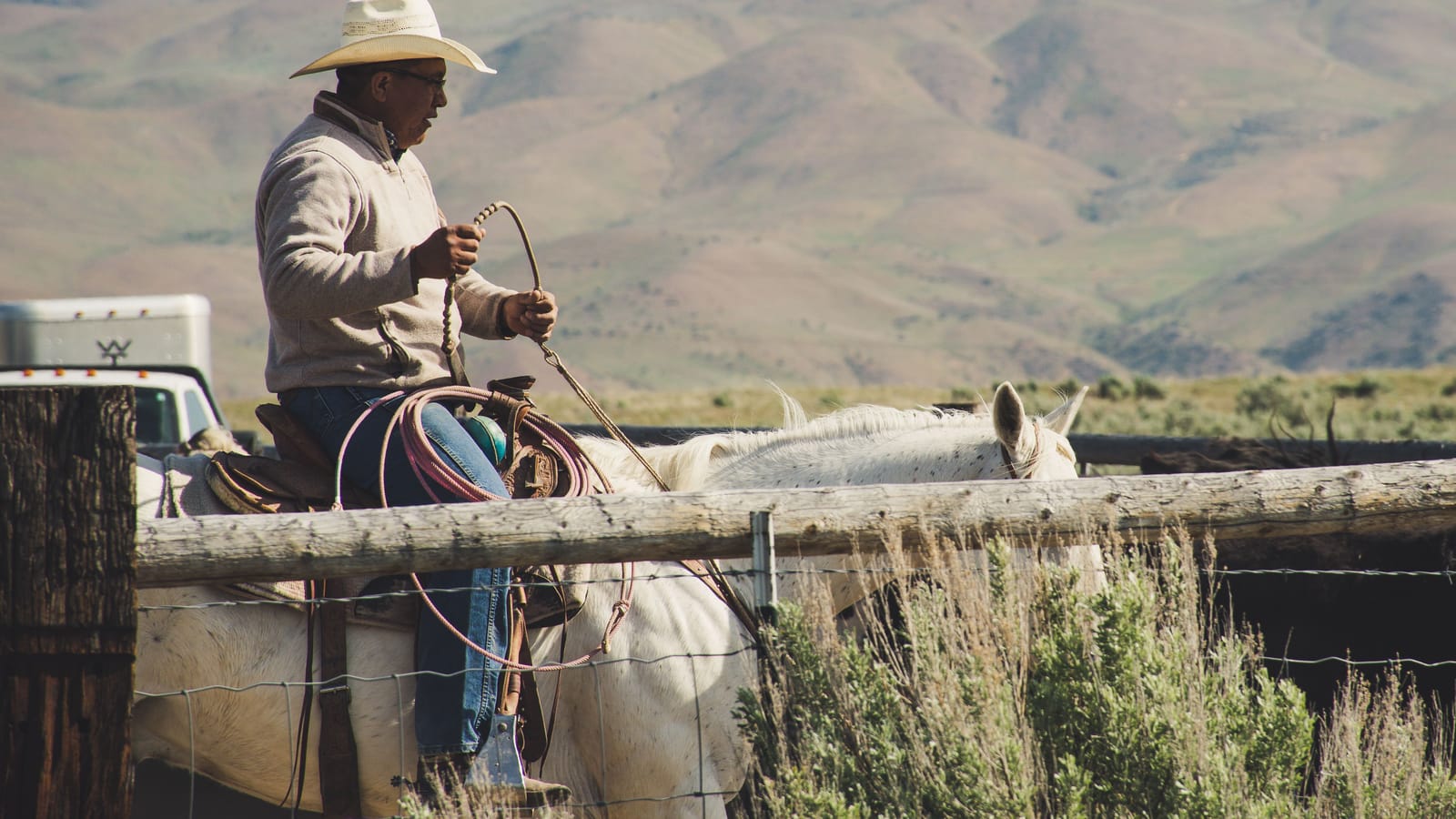
Thirty-four degrees and raining is the meanest weather on earth. Not twenty below. Not a blizzard. A gray, thirty-four-degree drizzle with a fifteen-mile wind behind it, the kind that goes on for six hours while you're stringing wire or standing at a sale barn. Snow you can brush off. That stuff finds the seam at your collar and works down.
Most guys own the wrong coat for it, because most guys buy a coat for the coldest day of the year and then wear it on the other three hundred.
So sort your outerwear by what the weather does, not by what the coat looks like on the hanger. There are only three problems: water coming at you, wind cutting through you, and heat leaving you. A coat that solves one usually makes another one worse.
The slicker solves rain and nothing else
A real slicker is PVC or rubber over a fabric backer. It's not "water resistant." Water has no path through it. The commercial fishing guys in Alaska wear the bib-and-jacket version for a reason, and that reason is that they stand in water for twelve hours.
The catch is that it doesn't breathe at all. Zero. If you're moving hard in a slicker, you will be wet in forty-five minutes, and it'll be your own sweat, which is worse because it soaks the layers underneath instead of running off the outside.
So a slicker is for standing still in the wet. Watching a game from a metal bleacher. Working an auction ring. Riding a four-wheeler down a muddy lane. Running a chute in a steady rain while the cows do the work.
It's also the cheapest solution to the worst weather by a wide margin, which is why every ranch pickup has one balled up behind the seat. Buy one that's cut long enough to cover your thighs when you sit down, and if you ride, buy the pommel style with the split tail and the leg straps.
What ruins them: barbed wire, and sun. A slicker snags and tears where canvas would shrug it off, and left in the back window of a truck through a couple of Julys, the material goes chalky and starts cracking at the fold lines. Store it inside, loosely, not folded into a square.
The duster is a work of engineering that most people wear as a costume
A proper oilskin duster runs to mid-calf, weighs something like five pounds soaking wet, and every odd feature on it has a job. The cape across the shoulders is a second layer of water shedding over the part of you that catches the most rain. The vent up the back opens out over the cantle of a saddle so the coat covers your legs instead of bunching at your waist. The leg straps keep the skirt out of the stirrups. The high collar buttons up under a hat brim so water runs off the brim and onto the outside of the coat, not down your neck.
On horseback, in weather, nothing else comes close. On a tractor with no cab, it's excellent. Walking fence in a cold drizzle, it's excellent.
Now the honest part. It's heavy. It doesn't breathe much better than a slicker. Oilskin is waxed cotton's rougher cousin, and it'll transfer wax onto a truck seat, a saddle, a couch, your wife's coat in the closet, anything warm it touches in summer. It's loud in the brush. And a full-length duster in a thirty-mile wind turns into a sail that beats your legs raw if you haven't buckled the straps.
If you're walking to a restaurant in it, you own a costume. If you're a hundred yards from the house with a calf that needs pulling and it's been raining since Tuesday, you own the best coat in the county.
The parka is where people overbuy, badly
A parka is insulation with a shell around it, and the number on the tag is the problem. Guys buy the expedition-rated one because it feels like buying an insurance policy, then wear it to do chores at 25 degrees and cook.
Insulation doesn't have a thermostat. You do, with zippers and layers. So think about the coldest temperature you'll actually be standing still in, and buy for that. Movement makes its own heat.
Down versus synthetic is the choice that matters. Down gives you the most warmth for the weight, and 650-fill is plenty for most people on most days. But wet down collapses into clumps and insulates about as well as a damp dish towel, and it takes a long time to dry. Synthetic fills are heavier and bulkier for the same warmth, and they keep working when they're damp.
The rule that holds up: if your weather is dry cold, buy down. If your weather is wet cold, or if you're going to sweat into it, buy synthetic. Dakota in January, down. The Pacific Northwest in February, synthetic.
Other things worth checking before you pay:
- A two-way zipper. So you can open the bottom and sit, or drive, without the coat riding up to your armpits.
- A hood with structure. A soft hood collapses in wind and blinds you every time you turn your head. A stiffened brim or a ruff holds shape and breaks the wind off your face. The fur ruff isn't decoration, it disrupts airflow across your cheeks.
- Pit zips, if you're going to work in it.
- Cuffs that close. Elastic inner cuffs plus an adjustable outer cuff. Wind up the sleeve undoes everything else.
Waxed cotton, the middle option nobody explains
Waxed canvas sits between a slicker and a dry coat. It sheds an hour of rain and turns wind cold. It breathes a little. It takes brush without tearing. It gets better looking with age in a way almost no synthetic does.
It won't keep you dry in an all-day soaker, and anyone who tells you otherwise has never stood in one for four hours. Treat it as your shoulder-season coat, October and April, and re-wax it when water stops beading on the shoulders and starts darkening the fabric. A bar of wax, a hair dryer, an hour on the porch. It's the easiest maintenance in your closet.
Fit, and the mistake made in the store
Try the coat on over what you'll actually wear under it. A flannel and a fleece, minimum. Then do the thing nobody does in a fitting room: put both arms straight out in front of you like you're steering, and reach both arms overhead.
If the cuffs climb past your wrist bone, the sleeves are short. If the back hem lifts up above your belt, the coat's cut for a mannequin standing at attention. Neither problem improves at home.
Shoulders should sit where your shoulders sit. Everything else can be a little generous, because air is insulation, but a parka you can't close over a sweater is a jacket you'll leave in the truck.
Keep the coat alive
Wash a down parka once a season with down-specific soap, not detergent, and dry it on low with a couple of clean tennis balls until the clumps break up. This takes longer than you think. Hours, not minutes. Pull it out damp and you'll grow mildew inside the baffles.
Never machine-wash waxed cotton or oilskin. Cold hose, a sponge, hang it to dry.
And hang your slicker. Don't fold it.
The right answer for most people, honestly, is two coats and not four: a synthetic parka for the cold and a slicker that lives behind the seat. The duster is for those who earn it.
Buy the one that matches your actual Tuesday, not the one that matches the photo you have in your head of yourself.
Tobias Reed
Style & Grooming
Spent a decade in menswear retail watching men buy the wrong size. Believes fit is ninety per cent of it and says so weekly.

Watch
Worth an hour of your evening
More from Country Style.
From channels we rate. Plays on YouTube.