
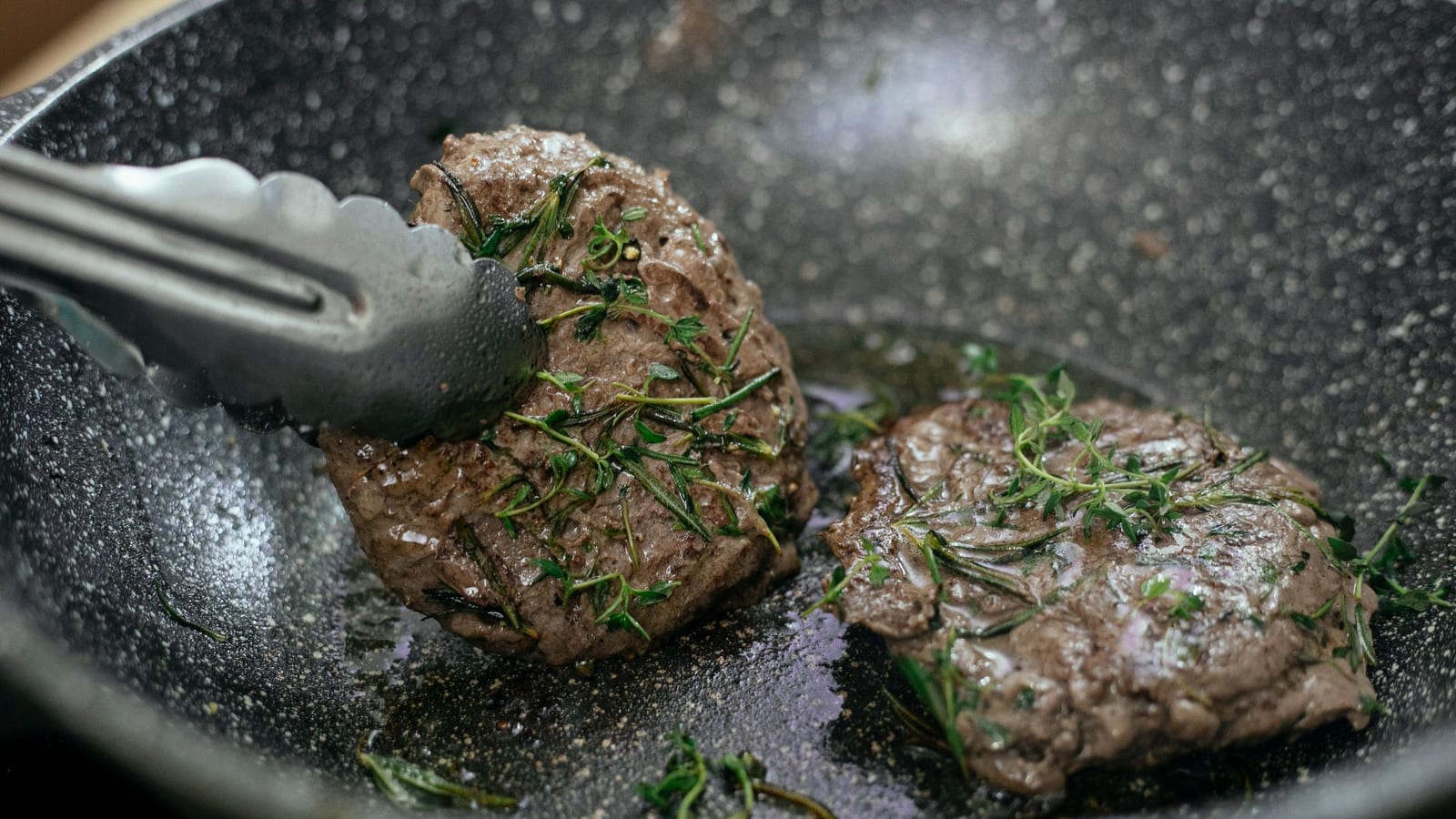
Quick answer: Backstrap and duck breast are lean, tender cuts. Cook them hot and fast and pull them early. Rabbit is lean and full of connective tissue. Cook it low and slow in liquid until it falls off the bone. Mix those up and you'll ruin all three.
The most common way to wreck a backstrap is to treat it like a pot roast. The most common way to wreck a rabbit is to treat it like a steak. Same hunter, same kitchen, same Saturday, two bad dinners. And then somebody at the table says wild game "just tastes gamey," and the meat gets the blame for what the cook did.
It isn't the meat. Wild animals are lean because they walk everywhere and nobody's feeding them corn in a pen. Lean meat has no fat to protect it. Past a certain temperature it goes gray, dry and livery, and no sauce on earth brings it back.
The flavor problem starts before the kitchen
"Gamey" is usually three things. Heat that stayed in the carcass too long. Blood and hair left on the meat. A shot that clipped the gut. You fix all of that in the field, and the kitchen can't fix it later.
Get the animal open, cleaned and cooling fast. If you're on your own, field dressing alone and getting the meat out covers the order of operations. Ducks and rabbits cool quickly. A deer on a 60°F afternoon doesn't, so get the hide off and get air around it.
Aging venison works if you can actually hold it between about 34°F and 40°F for several days. A garage in October that swings from 38 at dawn to 65 by lunch isn't aging meat. It's spoiling it slowly. Without a cold room or a spare fridge, butcher, wrap and freeze. Vacuum sealing beats freezer paper if you plan to keep it past a few months.
One more thing nobody mentions. Trim the venison fat. Deer fat doesn't render like beef fat. It turns waxy and coats your mouth, and it's where a lot of that "gamey" complaint really comes from.
Safe and legal before it's dinner
Regulations vary by state and province, sometimes by county, so check yours every season. A few rules show up almost everywhere:
- Tag first, then move it. Most places require the animal to be tagged before it leaves the spot where it fell.
- Waste laws are real. Many states require you to retrieve and keep the edible meat. Breasting out a duck and tossing the legs can be legal in one state and a citation in the next.
- Waterfowl means nontoxic shot. Lead shot has been banned for waterfowl nationwide since 1991, and you'll need a federal duck stamp and state HIP registration on top of your license.
- Chronic wasting disease. If you hunt deer where CWD has been found, the CDC recommends getting the animal tested before you eat it and not eating meat from one that tests positive. Many states also restrict moving whole carcasses across state lines.
- Rabbits and tularemia. Wear disposable gloves when you clean rabbits. If the liver has white or yellowish spots, or the animal acted sick or sluggish, throw the whole thing out. The old-timer rule about hunting rabbits only after a hard frost has some sense behind it, but it's no guarantee. Gloves are.
On temperatures, the USDA's guidance is 145°F with a three-minute rest for venison steaks and roasts, 160°F for ground venison and rabbit, and 165°F for duck and all other poultry. Plenty of experienced cooks serve backstrap and wild duck well below those numbers. That's their call to make, and it's yours too. Make it knowing the guidance, and know that kids, pregnant women, older folks and anyone with a weak immune system are the reason those numbers exist. For anything specific to your own health, ask your doctor.
Buy an instant-read thermometer. It's the cheapest thing in this whole hobby that improves every meal.
Venison backstrap: hot pan, short time, sharp knife
The backstrap is the tenderest muscle on the deer, and it needs almost nothing from you except restraint.
- Strip the silverskin. That's the shiny membrane on top. Slide a thin, sharp knife under it, angle the blade up slightly, and pull the skin taut as you go. Leave it on and the loin curls in the pan and chews like a rubber band. A dull knife makes this miserable, which is one more reason to look at what your knife and saw should be.
- Salt it. An hour ahead in the fridge is ideal. Right before it hits the pan is fine. Anywhere in between makes it wet, so pick one.
- Pat it bone dry. Moisture is why meat steams gray instead of browning.
- Get a cast iron pan smoking hot with a high-smoke-point oil like avocado or canola. Cook a whole section of loin, not medallions. Medallions overcook before they brown.
- Sear two to three minutes a side, turning to hit all four faces. In the last minute, drop in a big pat of butter, a smashed garlic clove and some thyme, tilt the pan, and spoon the butter over the top.
- Pull it at 125°F to 130°F if you're cooking by custom, or carry it to 145°F if you're going by USDA guidance. Rest it eight to ten minutes. Slice across the grain.
What to skip: the overnight soak in Italian dressing. Acid turns the outside of a tender cut mushy, and a backstrap doesn't need tenderizing. Skip the bacon wrap too. Bacon needs more time to crisp than backstrap has to give. By the time the bacon's done, the venison is overdone. Save the bacon for the rabbit.
The backstrap is the cut you brag about. Cook it like you respect it.
Duck breast: render it or sear it, then stop
Wild ducks aren't the fat Pekin ducks on a restaurant menu. A mallard or a wood duck has a thin fat cap, and a skinned teal has almost none. Which way you go depends on whether you plucked or skinned.
Plucked, skin on: Score the skin in a crosshatch without cutting into the meat. Salt it. Lay it skin side down in a cold pan, then turn the heat to medium. Starting cold lets the fat melt out slowly. Give it six to eight minutes, until the skin is thin and crisp, then flip it for a minute or two. Pull it around 130°F to 135°F by custom, or 165°F by USDA guidance.
Skinned: Treat it like a tiny steak. Hot pan, oil, about two minutes a side. Done.
Rest it five minutes, then slice it thin on a bias. While it rests, pour off most of the fat, add a splash of stock and a spoon of cherry preserves or orange marmalade to the pan, scrape up the brown bits, and let it bubble down for a minute. That's your sauce.
The concession: diving ducks and sea ducks that eat a lot of shellfish and fish can taste strong no matter what you do. Those birds are better ground into sausage or braised than served as a seared breast. Know what you shot.
Rabbit stew: the one that wants the whole afternoon
Everything above was about speed. Rabbit flips it. A wild cottontail is lean but full of connective tissue, and quick heat turns it to shoe leather. Time and liquid break that tissue down.
- Cut it into pieces. Two hind legs, two front legs, the saddle cut in two or three. The hind legs carry most of the meat. Pick out any shot pellets and trim away bloodshot meat around the wound.
- Brown it. Dredge the pieces in seasoned flour. Cook a few strips of bacon in a Dutch oven, take the bacon out, and brown the rabbit in the fat in batches. Crowd the pot and it steams.
- Build the base. Onion, carrot and celery in the same pot until soft. Garlic and a spoonful of tomato paste for a minute. Then enough chicken stock to almost cover the meat, a bay leaf, some thyme, and the bacon crumbled back in.
- Cover it and put it in a 300°F to 325°F oven for about two to two and a half hours. Add chunks of potato for the last hour.
- It's done when the meat slides off the bone with a fork. If it fights you, it needs more time, not more heat.
Pull the meat off the bones before serving. Rabbit bones are small and sharp, and fishing them out of a bowl at the table is a lousy way to end a good meal, especially with kids around.
A stew is also the right home for the pieces you can't sear: venison shanks, neck, the odd duck legs. The rule holds. Tough cuts get time.
Where the first plate goes
If somebody let you hunt their ground, the first package of backstrap goes to them. Not the shank. The good stuff, wrapped and labeled, dropped off without them asking. If you're still looking for that ground, where to hunt when you don't own a single acre will get you started, and a habit like this is how you get invited back.
You'll find the meat tastes better when you've shared it.
Wes Dunbar
Country & Skills
Grew up on an acreage and never quite left. Covers trucks, trades, land, and how to do the thing yourself.

Watch
Watch how it's done
Picked for this article.
From channels we rate. Plays on YouTube.
Forager Chef
Cooking venison strip in a cast iron skillet
Realtree
Backstrap 2 Ways | Cooking Venison with Duck Commanders
Read next