
The grill stays on the driveway. Not in the garage with the door rolled up, not on the covered porch, not in the breezeway by the back steps. The driveway, open sky above it, at least ten feet off the siding, and you stand out there in the cold and tend it like a man who intends to keep his family breathing.
That's the whole discipline. Everything else in this piece is detail.
Carbon monoxide is what makes cooking during an outage different from cooking on a camping trip. It has no smell, no color, no taste, and it doesn't warn you. CDC puts accidental carbon monoxide deaths unrelated to fires at more than 400 a year in the United States, and the numbers climb every time a big storm knocks out power across a few states at once. People don't die because they're careless. They die because it's 22 degrees, the wind is driving sleet sideways, and moving the stove six feet into the garage feels like a small, reasonable thing.
It isn't a small thing. An open garage door doesn't ventilate a garage. Neither does a cracked window.
The list of things that never come indoors
Charcoal grills. Gas grills. Camp stoves of any fuel. Propane heaters not rated and vented for indoor use. Generators. Anything with a wick, a burner or a firebox that wasn't installed in your house by a professional and vented through a chimney or flue.
The fireplace deserves its own warning, because it kills people every winter. A cold chimney has no draft. Dump charcoal in there during an outage and the combustion gases, including CO, drift right back into the living room. Your fireplace is for firewood, with the damper open, and even then it's a poor cooking surface.
The oven isn't a heater. It never was, and if it's gas, running it open is a slow way to fill a closed house with exhaust.
Where the stove actually goes
Open air, and away from the building envelope. CDC's guidance for generators is at least 20 feet from windows, doors and vents, and that's a sound distance to borrow for anything burning fuel. Wind matters. If the breeze is pushing exhaust back toward the kitchen window, move.
A simple field test: count the walls. Roof plus two walls or more, and you're inside, whatever the builder called it. Screened porches count as inside. Tents count as inside, and people die in them regularly. Carports are a coin flip depending on how open they are, which means treat them as inside.
Set up on something that won't burn and won't tip. A concrete driveway, a paver patio, a folding steel table. Not a wooden deck rail, not the tailgate of your truck, not on the grass next to a woodpile.
Keep a three-foot circle around the burner that kids and dogs don't enter. Announce it out loud. Enforce it once, hard, and you won't have to again.
Picking a stove before you need one
A two-burner propane camp stove is the honest default for a family. Coleman's classic green model has been made for decades, runs around sixty to ninety dollars depending on the year and the store, and it boils water faster than anything else at that price. It takes 16.4-ounce green cylinders that cost a few bucks at any hardware store. Get an adapter hose and you can run it off a 20-pound grill tank instead, which is the setup you actually want for a multi-day outage.
Fuel math, rough but useful: plan on one to two hours of real cooking per 16.4-ounce cylinder, less if you're running both burners hard. A full 20-pound tank will cook for a week and then some. Buy two tanks, keep one full, and store both outside. Never in the basement, never in the garage.
Butane single burners are cheap, quiet and great for a church potluck. They're poor for winter. Butane stops vaporizing near freezing, so on a 28-degree morning your stove sputters and dies exactly when you wanted coffee. Propane keeps working far below zero. If you live anywhere that gets real winter, buy propane.
Backpacking canister stoves burn isobutane blends and do better in the cold than straight butane, but they're built to boil two cups of water, not to feed five people. Fine as a backup. Not your primary.
Charcoal is slow, smoky and messy, and you can't turn it off. It's also nearly foolproof and the fuel stores forever in a dry tote. Worth having. Just remember the ash stays hot for a full day, so it goes in a metal can with a lid, not the trash bag by the fence.
Cook the fridge first
Day one, you eat what's thawing. Open the freezer as little as possible and work through the refrigerator in order of what spoils fastest. Milk, meat, leftovers. The USDA line is straightforward: a closed fridge holds safe temperature about four hours, a full freezer about 48. When in doubt, throw it out, and don't taste-test to decide.
Then shift to one-pot meals, because water is the other thing you're rationing. Every pot you use is a pot you have to wash. Rice and canned beans. Chili. Soup with whatever's left of the vegetables. Pasta cooked in just enough water that you drink the starchy rest as broth instead of pouring it out.
Boiling is your most valuable move and the cheapest on fuel. Oatmeal, instant coffee, dried soup, anything freeze-dried, plus the water you may be boiling for safety anyway under a boil notice. Frying eats fuel and makes dishes. Save it for the morning everybody needs a morale boost, and they will.
A wide-mouth thermos is an underrated piece of gear. Boil once in the morning, fill it, and you've got hot water at noon without relighting anything.
The alarm on the wall
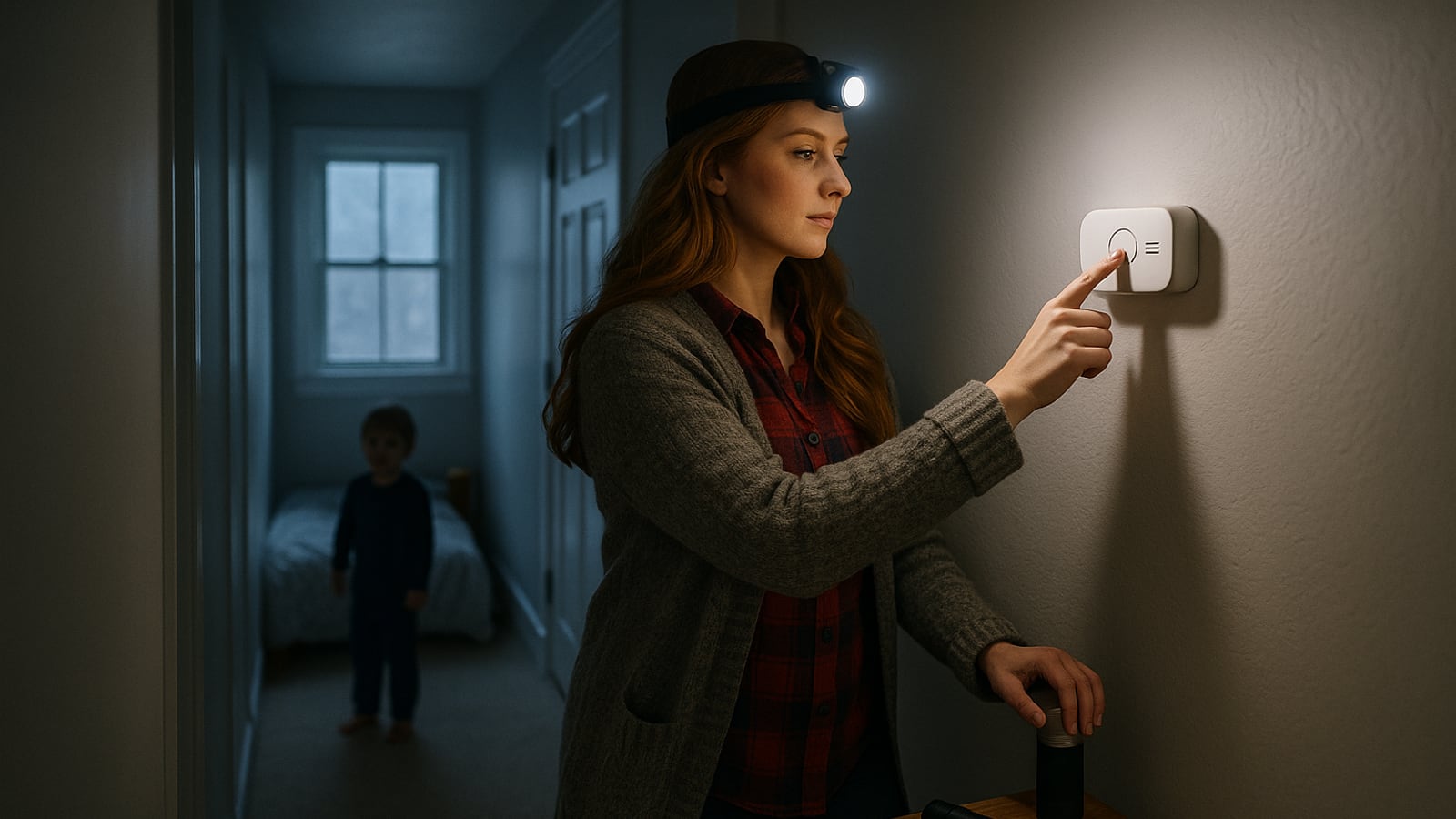
Battery-powered CO alarms, one on every level, one near the bedrooms. Test them in September and change the batteries then. Every CO alarm has an end-of-life date printed on the back, usually seven to ten years from manufacture. Pull yours off the wall right now and look. A dead alarm is a decoration.
Know the symptoms, because during an outage everyone is cold, tired and hungry, and those look similar. Headache, dizziness, nausea, weakness, shortness of breath, confusion. Flu without the fever. The tell is that more than one person feels it at the same time, and that they feel better outdoors. Pets often go down first.
If the alarm sounds or people are feeling it, you don't investigate. Everybody out the door, into fresh air, then call 911 from outside. Don't go back in to open windows.
Run it once when nothing's wrong
Take the stove into the backyard on a clear Saturday in October. Assemble it, light it, boil a pot, cook something your kids will eat. You'll find out the regulator hose is missing, or the igniter is dead and there are no matches in the tote, or the wind blows the flame out and you need a foil windscreen. Better to learn that with the lights on.
Then put it away with the fuel, the lighter, the lid, the tongs and a small fire extinguisher in one place, where a tired man can find it all in the dark with one hand.
The meal doesn't have to be good. It has to be hot, and everyone at the table has to still be there for the next one.
Wes Dunbar
Country & Skills
Grew up on an acreage and never quite left. Covers trucks, trades, land, and how to do the thing yourself.

Watch
Worth an hour of your evening
More from Preparedness.
From channels we rate. Plays on YouTube.
Read next