
The mower you can fix yourself outlasts the one you can't
Most mowers die of a ten-dollar problem nobody could get a part for. Buy the one with a parts diagram and a socket set's worth of screws.
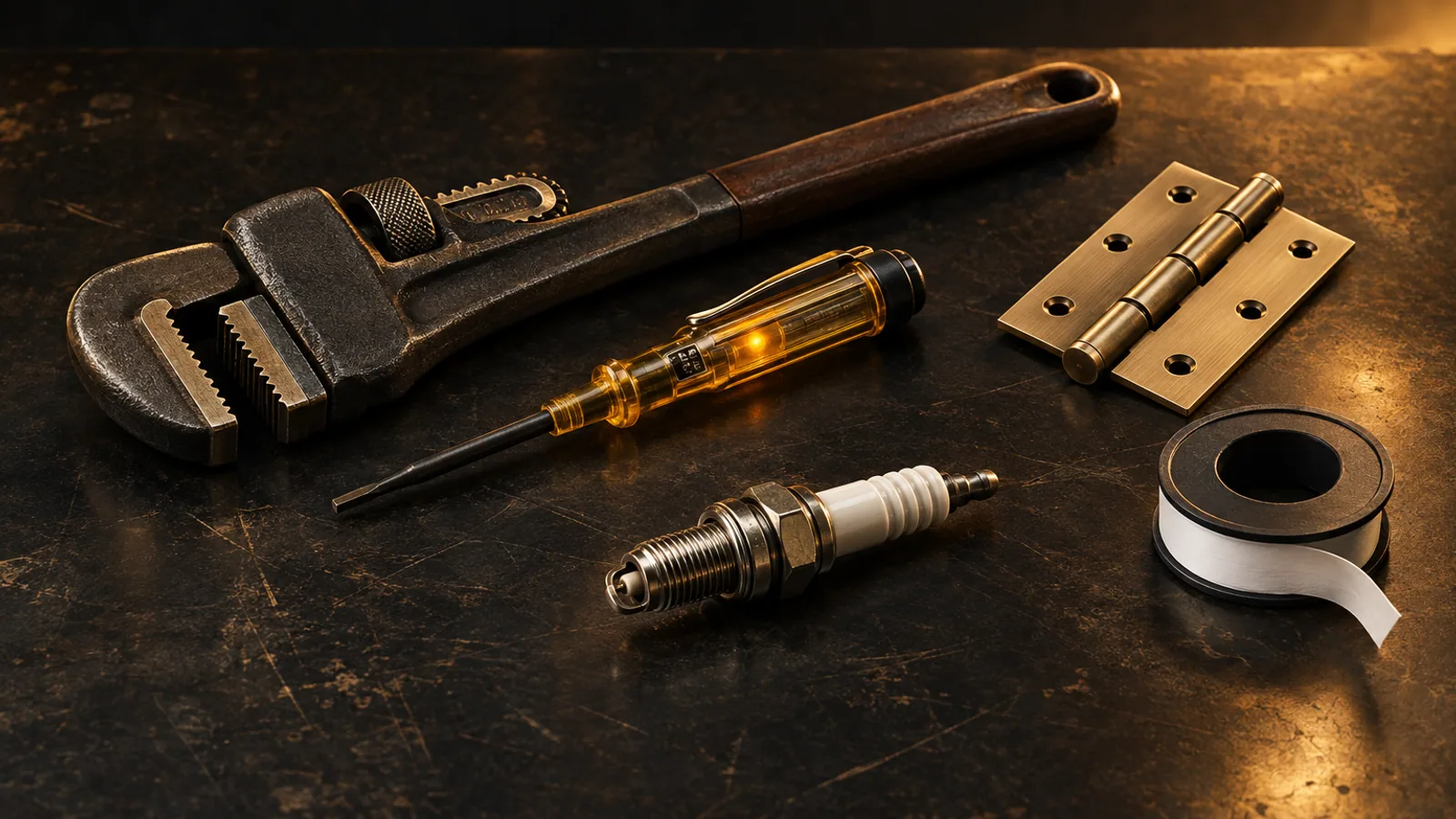
A mower that lasts is one you can open with a basic socket set. Look for a steel deck, an engine from a maker that sells parts, and a model number you can punch into a search bar and get a parts diagram back.
Everything else is marketing. A mower is a blade on a spinning shaft with an engine bolted over it, and it dies one small part at a time.
Where these usually wear out
Don't ask how tough a mower looks. Ask which parts take the abuse, and whether you can get to them.
The carburetor. On gas mowers this is the usual suspect. Fuel with ethanol in it can gum up the small passages when a mower sits all winter. A carb you can unbolt and clean is a minor job. One that's a sealed, non-serviceable assembly means the part price decides the mower's fate. Check the parts diagram and see what the carb costs by itself.
The blade and spindle. Look under the deck. The blade bolts to a shaft that rides in bearings, and rocks, roots and curbs hit it. Grab the blade (spark plug wire off first) and try to rock it. Any play at the shaft is a worn bearing or a bent shaft. On a floor model at the store, you can't do this. So find out whether the spindle assembly is sold as a separate part.
The deck itself. Steel rusts, especially where wet clippings sit. It's also the easiest material to patch, weld or scrape and repaint. Aluminum doesn't rust. Plastic doesn't rust either, but it can crack, and a cracked deck is a different kind of problem. Whichever you choose, check what the maker says the deck is made of.
The pull cord and recoil starter. The cord frays, the spring lets go, the plastic pawls wear. A good design lets you replace the whole recoil assembly with a few bolts. Ask whether it's sold as one unit.
The drive system on self-propelled models. Look for a cable you can adjust, or a belt you can reach. Sealed transmissions that can't be serviced are the ones to read about before you buy.
Wheels and height adjusters. Cheap plastic wheels and the little levers that set cutting height break first on most mowers. They're also the easiest to swap. Look for wheels held by a standard bolt or clip.
Cordless mowers add the battery. Batteries wear out by design. The mower may last twenty years. The pack may not. Find out whether the pack is a standard one the maker sells separately, and for how long they've kept a platform alive.
The warranty, decoded
Read the actual warranty document. Not the box, not the sales sheet. The document, before you pay.
What to read for:
- Length. Check whether the term covers the whole mower or just parts of it. Engine makers often warranty their engine separately from the company that built the deck and frame. Two warranties, two phone numbers.
- Parts versus labor. Many warranties cover a replacement part but not the shop's time to install it. If you're doing the repair yourself, that matters less. If you're paying a shop, it matters a lot.
- What voids it. Look for the words "residential use." Cut grass for money and a lot of warranties walk away. Also look for fuel rules and required maintenance, and whether you have to keep service receipts.
- Who pays shipping. Mowers are heavy. If a claim means freighting a deck to a service center, find out who covers it. Better still, find out whether a local dealer does warranty work.
- Registration. Some warranties start only after you register, or require the original receipt. Register the day you buy it and keep the receipt in the same place as the manual.
Longer isn't automatically better. A long warranty at a company that's hard to reach is worth less than a short one at a company that answers.
Can you fix it?
This is the real test, and you can run it before you spend a dime.
- Find the model number and search it. Add "parts diagram." If the maker publishes exploded diagrams with part numbers, you're in business. If you land on nothing, move on.
- Check who sells parts. The maker, a dealer network or a big parts retailer. Look at whether the parts you'd actually need (blade, belt, filter, plug, carb, recoil) are listed and in stock. Check the current price on a few.
- Look at the screws. Flip through photos of the underside and the engine shroud. Standard hex bolts and screws mean you can work on it with tools you own. Rivets, clips and glued seams mean you're prying.
- Look for a service manual. Some makers publish them free. Others sell them. A manual that exists is a sign the maker expects the machine to be repaired.
- Check how the engine is identified. Small engines carry a model, type and code stamped on the engine or on a sticker. That number is how you match a filter, a gasket or a carb. If the engine is a brand with a deep parts network, say Honda, Briggs & Stratton or Kohler, you've got a head start. The mower's name on the deck doesn't tell you much. The engine's name does.
Basic shop rules before you touch anything. Pull the spark plug wire and tuck it away from the plug. On a cordless, take the battery out. Let a hot engine cool. Shut the fuel off or run the tank low before you tip the mower, and tip it with the air filter and carburetor side up so oil and fuel don't run where they shouldn't. Wear gloves around the blade.
Some things belong to a pro: cracked engine blocks, internal engine rebuilds, bent crankshafts, anything involving a battery pack's internals. Take it to a small-engine shop. Local rules on disposing of old gas and oil vary, so call your county or town before you dump anything.
If the mower already won't start, work through spark, fuel and air in that order before you buy a single part.
What long-term owners report
Skip the launch-week reviews. Nobody's had a season of wet grass yet.
- Search for one-year-later and two-year-later reviews. Retailer review pages let you sort by date. Read the oldest ones.
- Read the one-star and two-star reviews for patterns. One person complaining about a switch is noise. Twenty people describing the same switch is a pattern. Look for repeats: a part that keeps breaking, a company that won't answer, a warranty claim denied.
- Check repair forums and owner groups. Search the model name plus "problem" or "won't start." See what people fix and how hard it was. That tells you more about repairability than the spec sheet.
- Ask a small-engine shop. Call one and ask what they see most and which brands they keep parts for. They don't have to like the answer for it to be worth hearing.
Cost per year of use
Say you're weighing two mowers. These numbers are an example, not a quote.
- Mower A costs $250 and lasts four seasons before something breaks that isn't worth fixing. That's about $62 a year.
- Mower B costs $450 and you keep it twelve seasons by changing the plug, filter, oil and blade, and rebuilding the carb once. That's about $37 a year before upkeep.
Add upkeep to both. Say $30 a year for oil, a filter, a plug and a blade sharpening. The gap holds. And the parts cost goes in the "repairs" column, not the "buy a new one" column, which is the point.
Run your own numbers in the BRO cost-per-use calculator. Be honest about how long you'll really keep it.
Before you buy
- Search the model number plus "parts diagram" and confirm the diagram exists.
- Check the engine brand and whether parts for that engine are easy to find.
- Confirm the carb, recoil starter and blade/spindle are sold as separate parts.
- Look at the underside photos for standard bolts rather than rivets or glue.
- Find out if a service manual is available, and what it costs.
- Read the actual warranty: length, parts versus labor, residential-use limits, shipping, registration.
- Read the one-year-later reviews and the one-star reviews for repeat complaints.
- Ask a local small-engine shop whether they'd work on it and stock its parts.
- For cordless, confirm the battery is sold separately and the platform shares packs with other tools.
- Check the current price against the cost-per-year math, not just the sticker.
A mower is one of the few machines left that your grandfather could've fixed, and you still can. If you buy the right one.
Wes Dunbar
Country & Skills
Grew up on an acreage and never quite left. Covers trucks, trades, land, and how to do the thing yourself.

Watch
Watch how it's done
Picked for this article.
From channels we rate. Plays on YouTube.
Steve's Small Engine Saloon
EASIEST WAY To Clean a Plastic Briggs Carburetor
The Original Mechanic
When your mower won't start: How to clean the carburetor on 5HP Briggs and Stratton engine
Read next