
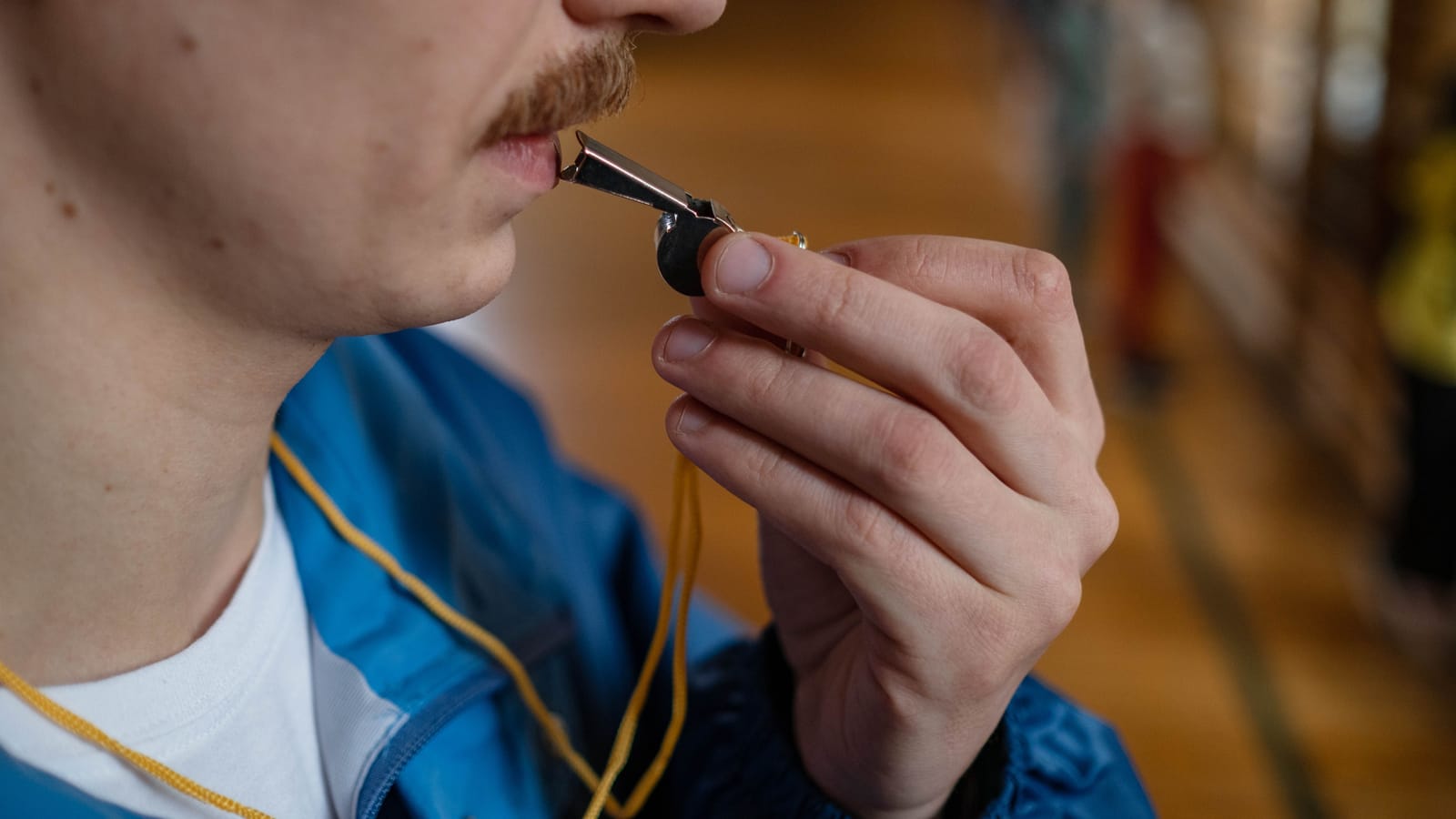
A whistle weighs less than a AA battery and doesn't care how cold it is, how wet it got, or whether the tower down the road is still standing. That's the whole argument. Put one on every backpack, every life jacket, every go bag in the house, and you've bought your family a voice that carries after their actual voices are gone.
Because that's what happens. People who get lost or trapped yell. They yell for twenty minutes, they shred their throat, and by hour three they can produce a sound that carries about forty feet. A whistle does the work with almost no breath, through wind and rain, and it keeps doing it for hours.
The rule of three, and the other rule of three
Two different things go by that name, so get them straight.
The survival version is the memory aid about three minutes without air, three hours without shelter in bad conditions, three days without water, three weeks without food. Useful for triage. Not what we're talking about here.
The signaling version is older and simpler: three of anything means distress. Three whistle blasts. Three fires. Three flashes of a light. Three shouts. Three shots, if you're in a place where that's the tool you have. The reply, if somebody hears you and wants you to know it, is two.
Nature doesn't do things in threes on a regular interval. That's why it works. A woodpecker, a branch cracking, a car door slamming — none of it repeats in a deliberate group of three every minute. When a searcher hears that pattern, he knows it's a person.
So the drill is: three blasts, pause, listen for a count of sixty, three blasts again. The pause isn't optional. People blow the whistle continuously, wear themselves out, and never once stop long enough to hear the answer or to let a searcher take a compass bearing on the sound.
Buy the whistle that works when it's wet
Get a pealess whistle. The old-fashioned kind with the little ball inside can jam when it's soaked or iced up, and the ball is one more thing to fail. Pealess models — Fox 40 and Storm are the two names everybody in the water-rescue world knows — have no moving parts and blow just as loud submerged and shaken out.
Cheap. Single digits at most sporting goods counters, and you want four or five of them anyway.
Clip one to the shoulder strap of each kid's school backpack, one inside the truck's glove box, one on every PFD, one on the nightstand. That last one isn't paranoia. If a tornado drops part of the house on you, the neighbors are going to be standing on the pile trying to figure out where you are, and a whistle from under the debris beats a shout every single time.
Teach the kids the pattern and then tell them the rule that goes with it: the whistle isn't a toy, and it's not for anything but "I need help right now." Test it once outside. Once is plenty.
The mirror is the longest-range thing in your kit
A signal mirror flash can be seen from a great deal farther than any handheld flashlight you own, and its battery is the sun. It's also the piece of gear people carry for years without ever learning to aim, which makes it decorative.
Aiming a mirror with a sighting hole:
- Hold the mirror a few inches from your eye and look through the hole at the aircraft, boat or ridgeline.
- You'll see a bright spot of light on the back of the mirror or on your face, depending on the design.
- Move the mirror until that bright spot sits right on the target you're looking at through the hole.
- Hold it there. Wiggle it slightly to make the flash pulse.
No hole? Use the V. Stretch one arm out, make a V with two fingers, put the target in the notch of the V. Catch sunlight on the mirror and walk the reflection up your arm, across your hand, and through the V. When the flash crosses the V, it's crossing the target.
Two things the instructions leave out. First, sweep the horizon even when you don't see anybody — pilots and boat crews have spotted flashes from people who had no idea anyone was out there. Second, once an aircraft has clearly seen you and is turning in, quit flashing. Nobody wants a pilot on final approach with a bright light in his eyes.
Practice this in the backyard on a Saturday afternoon. Put a kid on the far side of the fence and try to put the flash on his chest. It takes about ten minutes to learn and you'll never forget it.
Fire, smoke and the shapes that don't occur in nature
Three fires in a triangle, or three in a straight line, spaced far enough apart that they read as three and not one big mess. That's the classic ground signal, and it's still in the field manuals because it still works.
Smoke is the daytime version, and contrast is the whole game. Green branches and damp material make pale smoke, which shows up against dark timber. Anything oily or rubber makes black smoke, which is what you want against snow or pale sand. Match the smoke to the background, not to your mood.
For ground-to-air, big beats clever. Stamp it in snow, dig it in sand, lay it out in logs, rocks, gear, a bright tarp. Straight lines and sharp angles are the tell — the earth hardly ever makes them, so a pilot's eye snags on them. Aim for letters about ten feet tall with thick strokes.
The international codes worth memorizing are short:
- V — require assistance
- X — require medical assistance
- N — no
- Y — yes
- An arrow — I'm traveling this way
If you only keep one, keep X. It's the one that changes what the helicopter brings.
The electronics that actually get answered
A cell phone will attempt a 911 call over any carrier's tower, not only yours, so try the call even when the bars say no service. Text-to-911 works in a lot of jurisdictions now and a text will sometimes squeeze through on a signal too weak for voice. Newer iPhones can route an emergency message over satellite.
For anybody who hunts, hikes, boats or drives long empty highways, a personal locator beacon or a satellite messenger is the real answer. A 406 MHz PLB talks to the search and rescue satellite system and doesn't need a subscription. Registering it with NOAA is free at beaconregistration.noaa.gov, takes a few minutes, and that registration is how the responding agency knows who you're and who to call before they launch. An unregistered beacon still transmits. It just starts everybody at zero.
Boaters: the Coast Guard requires visual distress signals on most recreational vessels, and pyrotechnic flares expire — the date is stamped on them. Keep them in date, keep them dry, and take the expired ones to a hazmat collection or ask your local fire department. Don't fire an old one off for fun. Somebody will call it in, and a crew will launch.
At the house, the signal is a sign
Storm signaling isn't all wilderness. After a hurricane or a flood, crews go door to door, and the fastest way to be counted is to be obvious. A bright sheet, a towel, a piece of plywood with OK or HELP painted on it, hung where somebody driving the street can see it from the cab of a high-clearance truck. Check with your county emergency management office before the season — some of them publish a specific sign they want residents to use.
If water is rising in the house, go up, but don't shut yourself in a closed attic with no way out. That's official flood guidance for a reason, and the reason is grim. Take the ax or the pry bar with you.
Stuck in a vehicle? Stay with it. It's a hundred times easier to spot than you are, it's shelter, and it holds the flashlight, the whistle and the mirror. Hood up, something bright tied to the mirror or the antenna, dome light on at intervals if the battery allows.
Put the whistles in the mail order tonight. Learn the mirror on Saturday. Teach the kids "three means help" at dinner, and see if they can still tell you in a month.
Wes Dunbar
Country & Skills
Grew up on an acreage and never quite left. Covers trucks, trades, land, and how to do the thing yourself.

Watch
Worth an hour of your evening
More from Preparedness.
From channels we rate. Plays on YouTube.
Read next