
A bench vise should outlive you, so buy it like one
Weight, a good screw, and parts you can still get in 2060: how to pick the one shop tool your kids will fight over.
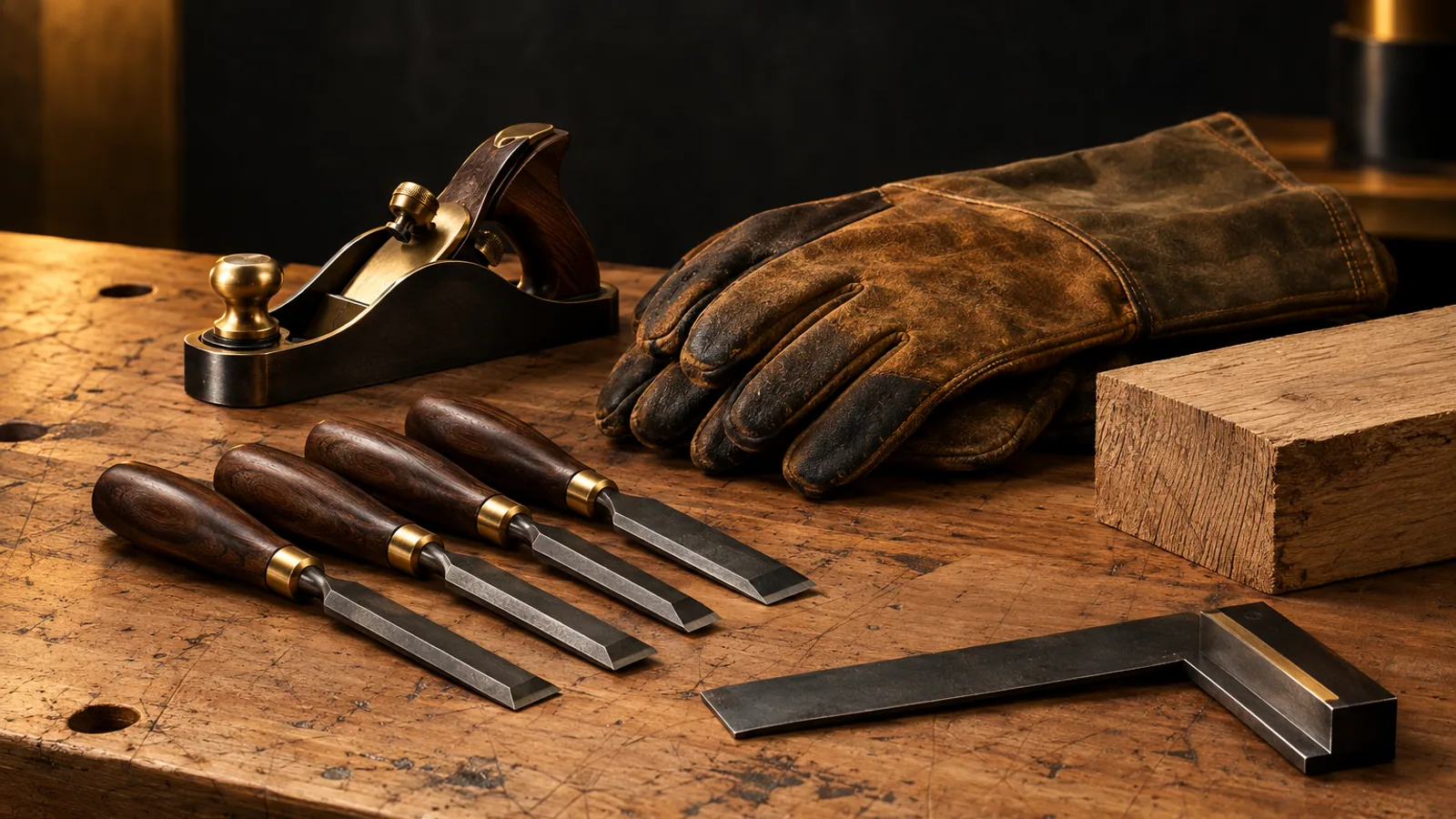
Quick answer: A vise lasts when it's heavy, made of a tough casting, and has a screw and nut you can replace. Buy the one with parts available over the one with the longest claim on the box.
The best value may be a used vise from a maker that's been around for a century.
Where these usually wear out
A vise has almost nothing to break. It's a body, a screw, a nut, and two jaws. That's why the failures are predictable, and why you can check for every one of them before you pay.
The casting. Cheap vises are often brittle cast iron. Hit one with a hammer, or slip a length of pipe over the handle for extra leverage, and the body can crack. Look at the base of the movable jaw and the mounting ears. Those take the stress. When you compare models, check what material the maker lists. Ductile iron and cast steel are tougher than plain gray iron, but read the spec sheet to see what the maker actually claims.
The screw and the half nut. The screw turns inside a nut in the movable jaw, and that nut wears first. Crank the vise through its full travel. It should feel the same at every point. A rough spot, a gritty spot, or a spot that's loose means worn threads.
The slide. Close the jaws a few inches and grab the movable one. Try to rock it up and down. Some play is normal. A lot of play means the jaws won't meet flat, and they'll chew your work.
The jaws. Close them fully. Hold the vise up to the light. A thin, even line is fine. A wedge-shaped gap is a problem. Replaceable jaw plates are a good sign, because the face is the part you'll mar.
The extras. Quick-release levers, swivel bases and lock handles all add moving parts. They're handy, and they're also more things to wear. Decide whether you'll use them before you pay for them.
The warranty, decoded
A long warranty is nice. A usable one is better. Read the actual document before you buy. Don't trust the box or the product page's summary of it.
Check these:
- Length. "Limited lifetime" can mean the maker's lifetime of that model, or yours. Find out which.
- Parts versus labor. A vise rarely needs labor. It needs a screw or a jaw plate. Make sure the parts are covered, not just a swap of the whole unit.
- What voids it. Many makers exclude hammering on the jaws, extending the handle with a pipe, or commercial use. Those are exactly how people break vises, so know the exclusions.
- Shipping. A vise is heavy. If you pay to ship it both ways, the "free" repair isn't.
- Registration. Some warranties are void unless you register. Do it the week you mount it, and keep the receipt in a folder.
A used vise has no warranty. That's a trade-off, and it's the reason the next section matters more.
Can you fix it?
This is where a vise you can pass down separates from one you can only throw away.
- Does the maker sell parts? Look for a parts diagram or a parts list on the maker's site. If the screw, handle, nut and jaw plates are listed with part numbers, you're in good shape.
- Is it bolted or riveted? Jaw plates held on with screws come off. Plates that are riveted or glued don't.
- Are the fasteners standard? Common hex and socket heads mean any hardware store can help you. Odd proprietary ones don't.
- Is there a service manual or an exploded view? If you can't find one, expect to learn by taking it apart.
- Can a machine shop help? A plain screw and nut is simple work for one. A quick-release assembly isn't.
Old American vises from makers like Columbian, Wilton and Reed turn up at estate sales and flea markets all the time. They're typically built simply, and a lot of them need only a cleaning, fresh oil on the screw, and new jaw plates. Check the casting for cracks, run the screw through its travel, and walk away from any with a visible weld repair at the base. Then leave it better than you found it. Clean it, oil it, and hand it down in better shape than it came to you.
What long-term owners report
You can't invent a lifespan, and neither can the product page. What you can do is read what people say after the honeymoon.
Search for the model name plus "one year later" or "five years later." Skip the unboxing reviews. Then sort the one-star and two-star reviews and look for patterns, not single complaints. If six different people say the jaws won't close flat, that's a design problem. If one person dropped it off a truck, that's not.
Then go to the forums where people actually use vises: woodworking, metalworking and blacksmithing communities. Search the model there. Ask what people replaced after they bought one. A thread titled "my vise cracked" is worth ten of the glowing reviews.
Cost per year of use
Run a worked example. Say a decent new vise costs $200, and a cheap one costs $60. Those are examples, not quotes. Check the current prices yourself.
If the $200 vise lasts 30 years, that's about $6.67 a year. If the $60 vise cracks or wears out and you replace it every five years, that's six vises in 30 years, or $360, about $12 a year. And the replacement gets annoying every time.
Now say you find a used one for $80 and spend $20 on jaw plates and a cleanup. That's $100, which comes to roughly $3.33 a year over 30 years. The lifespans in all of this are assumptions. The point is the shape of the math, and you can run your own numbers in the BRO cost-per-use calculator.
Before you buy
- Check the maker's listed weight and compare it against other models. Heavy is a good sign.
- Check the listed body material. Ductile iron or steel beats brittle gray iron.
- Choose a jaw width you'll use. Four to six inches covers most home shops.
- Run the screw through full travel. It should feel smooth.
- Close the jaws and look for a gap.
- Rock the movable jaw. Some play is fine. A lot isn't.
- Look for cracks at the base and mounting ears.
- Find the parts list before you pay. If you can't, ask the seller.
- Read the warranty document for length, parts coverage, exclusions and shipping.
- Plan the mounting. A great vise on a flimsy bench is wasted. Through-bolt it, and build the bench to match. Our guide on a garage workshop you'll use on a Tuesday night covers where it should sit, and the five tools worth buying first is a good place to spend what you save.
Buy it once, mount it right, and don't hit it with a hammer. The one that's still bolted to the bench in forty years is the one somebody's going to want.
Dean Shaw
Gear & Garage
Reads the warranty, the parts list and the long-term owner reviews before anything else. Trucks, tools, watches, and the cheap version that costs more.

Watch
Watch how it's done
Picked for this article.
From channels we rate. Plays on YouTube.
Project Farm
Best Bench Vise? $60 vs $500 “Unbreakable” Vise? Irwin, Yost, Wilton, Ridgid, Heuer, Central Forge
Derek's Workshop and Projects
Things To Know When Buying A Bench Vise
Read next